Service
Flake Floor Systems
Flake floor systems are decorative concrete coatings that use broadcast vinyl flakes between the base coat and protective topcoat for residential and commercial floors. Epoxy Panda installs flake systems throughout Dallas–Fort Worth for garages, shops, utility areas and other spaces where a durable, textured and visually forgiving finish is preferred.
Best for
- Residential garages where homeowners want a finished appearance that hides everyday dust, minor debris and small visual imperfections better than a uniform solid-color floor.
- Commercial or shop spaces that need a decorative finish with more visual texture than a plain coating.
- Concrete floors where traction, cleanability and appearance all need to be balanced rather than optimized for only one characteristic.
- Customers who want to choose from different flake blends and coverage levels instead of using a single solid floor color.
How it works
- Prepare the concrete mechanically. The slab is inspected and mechanically profiled, typically with diamond grinding, to remove weak surface material, incompatible coatings, contaminants and smooth areas that could interfere with adhesion. Proper preparation is especially important because the decorative flake does not compensate for a poorly bonded base coat.
- Repair appropriate defects before coating. Cracks, pits and spalled areas that are suitable for repair are addressed after grinding and cleaning. The repair material must be compatible with the coating system, and repaired cracks can still become visible later if the concrete continues to move.
- Apply the pigmented base coat. A compatible coating is rolled or otherwise applied over the prepared concrete. The base color is selected to work with the chosen flake blend and helps provide continuous coverage underneath the decorative broadcast. Epoxy Panda flake systems use an epoxy or polyurea base coat.
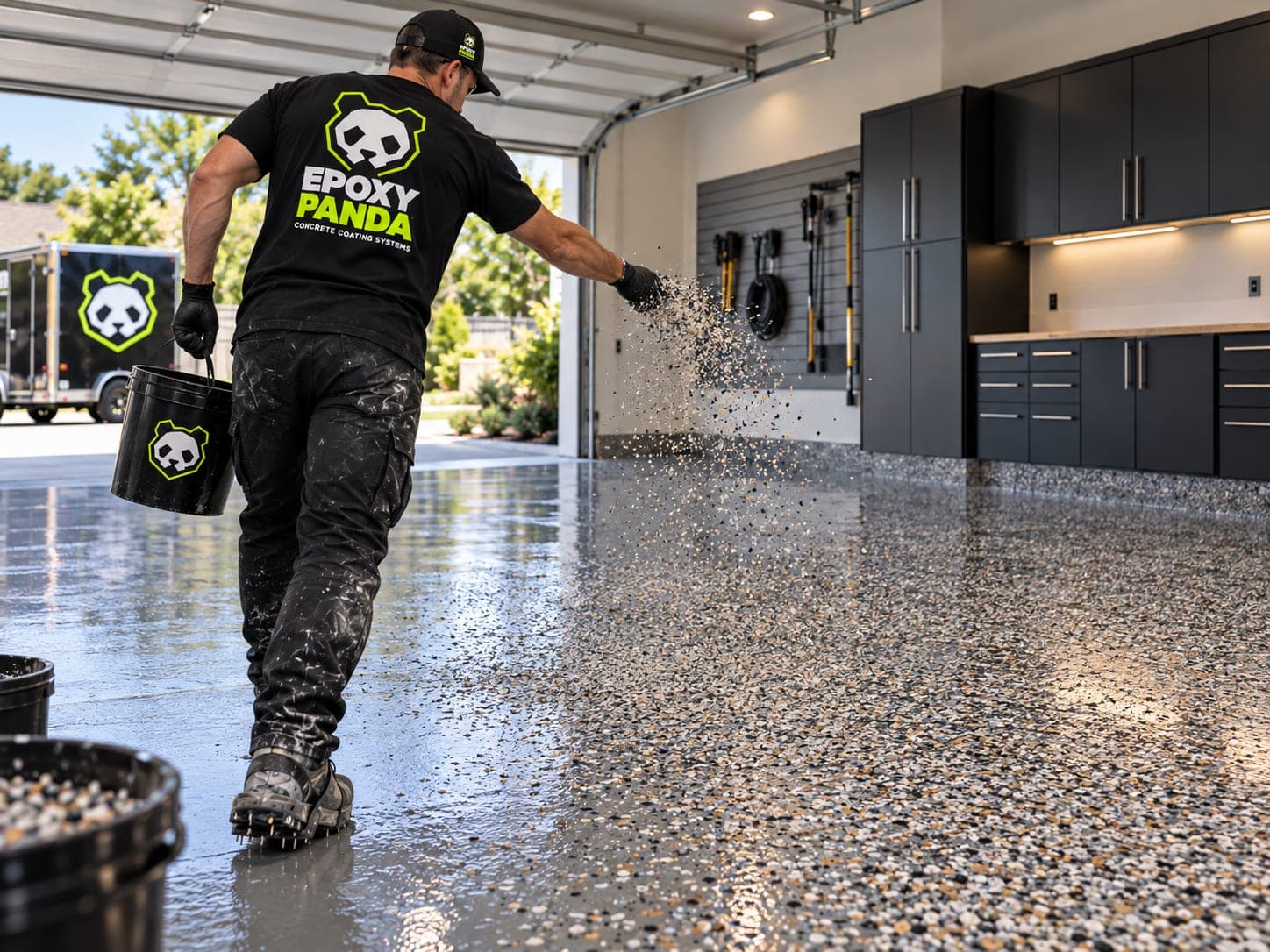
- Broadcast decorative flakes into the wet coating. Vinyl flakes are distributed across the surface while the base coat is still receptive. The system may use a lighter partial broadcast or a heavier full broadcast depending on the desired look and specification. A full broadcast typically covers the underlying base color more completely and creates a more heavily textured surface.
- Remove excess flake and refine the surface. After the coating has reached the appropriate stage, loose flakes are removed and the surface is scraped or otherwise prepared to knock down raised edges and create a more consistent profile for the topcoat.
- Apply the clear protective topcoat. A compatible clear coat seals the decorative flake and creates the final wear surface. The chosen topcoat affects gloss, texture, cleanability, wear characteristics and UV performance, so it should be selected for the actual environment rather than appearance alone. Epoxy Panda’s standard clear topcoat for flake systems is polyaspartic.
Benefits and trade-offs
- Decorative flake creates visual depth and variation, which can make ordinary garage or commercial concrete look substantially more finished.
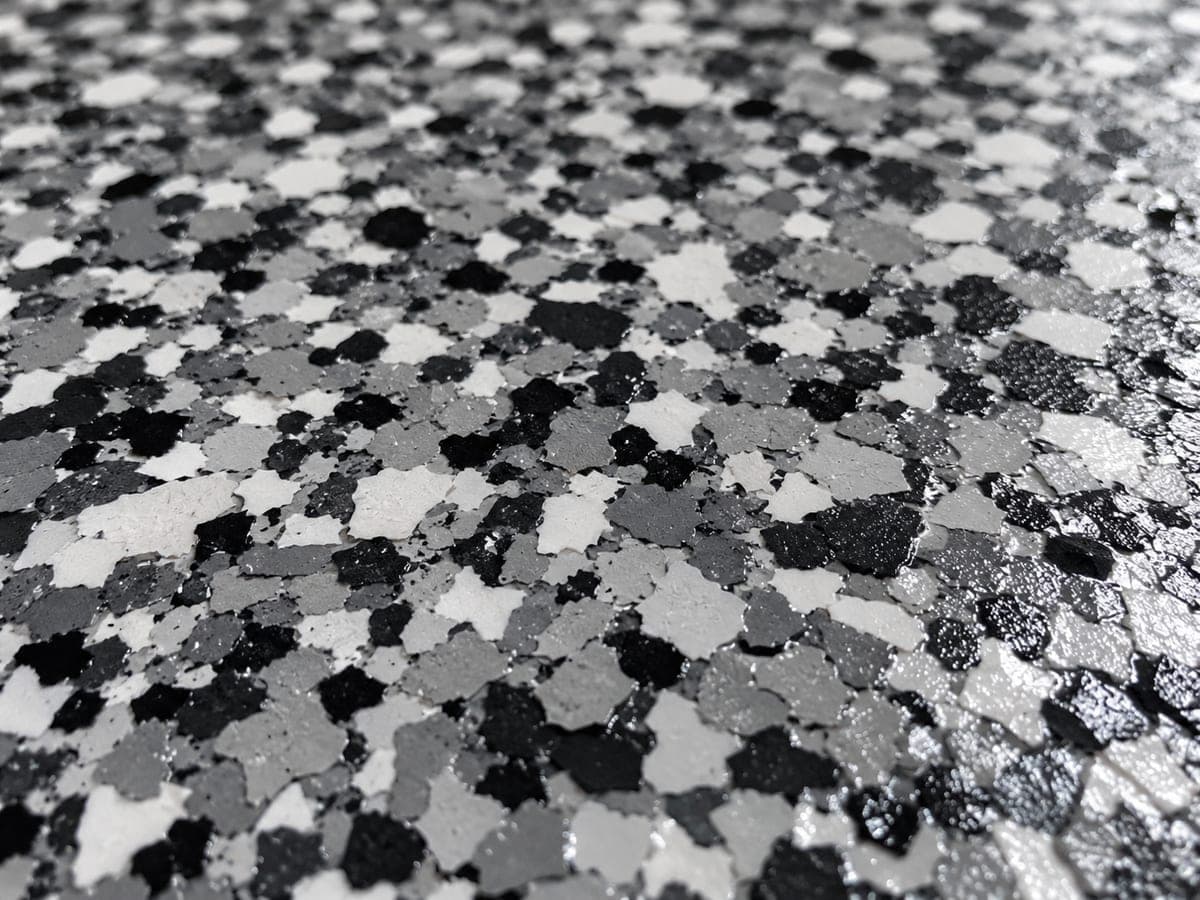
- Multicolor flake blends tend to disguise dust, small debris, light scratches and minor visual inconsistencies better than highly uniform solid-color floors.
- The broadcast creates texture, and additional traction material can be incorporated when a project needs more grip.
- A flake floor is still a resin coating system. Its performance depends on the preparation, base coat, topcoat and condition of the concrete underneath it.
- A heavily textured surface may provide more traction but can hold dirt more readily and require more effort to mop than a smoother finish.
- The final appearance varies slightly from area to area because flakes are broadcast rather than printed in a repeating pattern. This natural randomness is part of the intended look.
- Individual decorative flakes are not the protective layer by themselves. The clear topcoat is what seals the broadcast and provides much of the finished surface performance.
- Damage to a flake system can sometimes be repaired, but a spot repair may remain visible because matching the exact random flake distribution and surrounding sheen can be difficult.
- Dark flake blends can show light-colored dust, while very light blends may make dark dirt, tire marks or spills more noticeable. Color selection should consider how the floor will actually be used.
- For areas receiving significant direct sunlight, the UV characteristics of the base and topcoat matter. The decorative flake itself does not make an otherwise UV-sensitive coating system suitable for exterior exposure.
What affects cost and timing
Planning range
Use the planning calculator for an estimate based on your garage size, or request a free estimate.
Standard garage pricing includes
- Mechanical diamond grinding
- Standard concrete surface preparation
- Minor routine crack and pit repair
- Pigmented base coat
- Full decorative flake broadcast
- Protective clear topcoat
May add to the price
- Existing paint or coating removal
- Significant crack or spall repair
- Oil or chemical contamination
- Steps
- Stem walls or other vertical surfaces
- Cove base
- Additional traction
- Specialty or custom flake blends
- Difficult access
- Moisture-related remediation
- Specialty or additional topcoats
Planning estimate only. Pricing assumes a standard coating installation on reasonably sound concrete and includes mechanical grinding, minor routine repairs, base coat, full flake broadcast and protective topcoat where applicable. Existing coating removal, significant concrete repair, steps, vertical surfaces, specialty traction and other project-specific conditions may increase the final price. Your written estimate confirms the actual project price.
- Total square footage and complexity of the floor layout.
- Condition, hardness and porosity of the concrete.
- Existing coatings, sealers, adhesive or contamination that must be removed.
- Crack, pit, spall and surface-repair requirements.
- Selected flake coverage level, such as partial or full broadcast.
- Flake blend selection and whether custom color combinations are required. Epoxy Panda offers custom blends by request.
- Base-coat chemistry and number of coating layers in the specified system.
- Type and number of clear topcoats.
- Desired traction level and whether additional aggregate is incorporated.
- Steps, stem walls, curbs, vertical surfaces or other detailed areas included in the coating.
- Moisture conditions in the concrete.
- Temperature and humidity during application.
- Whether an existing flake system must be removed before the new installation.
- Required return-to-service schedule for foot traffic, storage, equipment or vehicles. For most Epoxy Panda systems, light foot traffic is typically possible in approximately 12–24 hours and vehicle traffic in approximately 24–72 hours. Exact timing depends on coating chemistry, temperature, humidity and project conditions.
Care and maintenance
Sweep, vacuum or dust-mop the floor regularly to remove grit that can wear against the clear topcoat under foot or vehicle traffic. For routine cleaning, use water and a mild cleaner that is compatible with the installed coating, then rinse or remove residue so it does not build up in the floor texture. Clean oils, chemicals and strongly colored spills promptly, and avoid dragging sharp metal objects across the surface. Heavily textured flake systems may benefit from a soft-bristle deck brush or appropriate floor-cleaning equipment when a standard mop cannot reach into the texture effectively.
Questions about flake floor systems
What are the flakes in a flake floor system?
The decorative material is typically colored vinyl flake broadcast into a wet base coat. The flakes create the color pattern and texture, while the coating layers underneath and above them form the protective flooring system. Flakes are available in different colors, sizes and blends, allowing the finished floor to range from subtle neutral combinations to more contrasting designs.
Is a full-flake floor better than a partial-flake floor?
A full broadcast is not automatically better, but it creates a different finish with more complete decorative coverage and typically more texture. A partial broadcast leaves more of the pigmented base coat visible and produces a less heavily patterned appearance. The best choice depends on the desired look, traction, cleaning expectations and the system specification.
Are flake floors slippery when wet?
They can be, depending on the amount of texture and the topcoat used. The scraped flake surface naturally creates some texture, and additional traction material can be added when wet conditions are a concern. More texture generally improves grip but can also make the floor more difficult to clean, so the goal is to choose the appropriate balance for the space.
Can I choose the color of the flakes?
Yes, flake systems are available in different color combinations and blends. The blend should be selected with the room, surrounding finishes and the type of dirt or wear the floor is likely to see in mind. Epoxy Panda’s standard flake is 1/4-inch decorative vinyl flake in these color families: gray/black/white, charcoal, tan/beige, brown/earth tones, blue/gray and light neutral. Custom blends are available by request.
Can flake floor systems be used outside?
Potentially, but the complete coating system must be suitable for exterior exposure. North Texas sun and UV exposure make the chemistry of the base and topcoat particularly important outdoors. A decorative flake broadcast alone does not make an indoor coating UV stable, so exterior projects need a system specifically selected for those conditions.
Related services

Ready for a Better Floor?
Tell us about your project and we'll help you determine the right coating system for your space.