Service
Commercial Floor Coatings
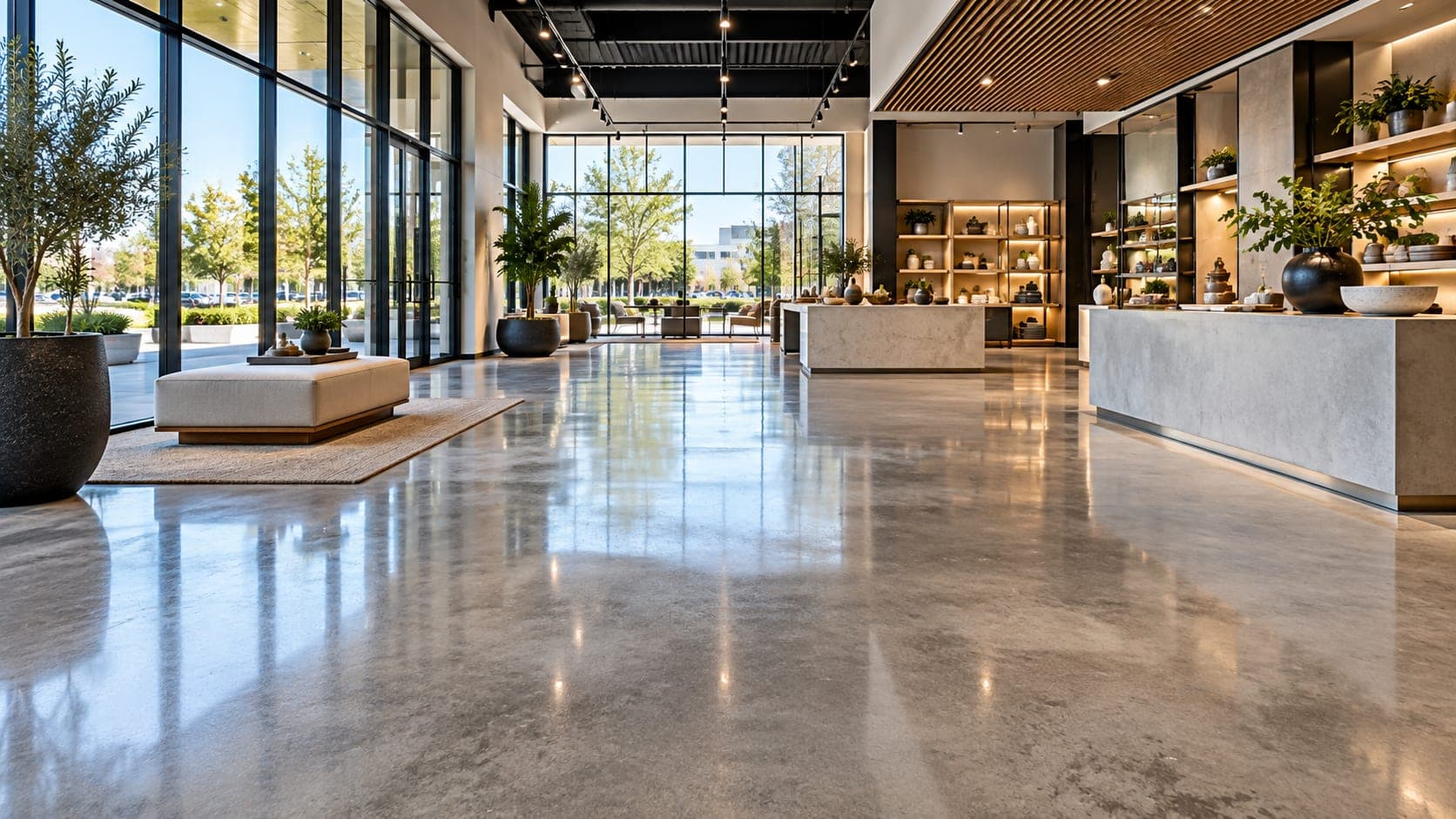
Commercial floor coatings are protective concrete systems for businesses, shops, facilities and other spaces that need a cleaner, more durable working surface. Epoxy Panda installs commercial coating systems throughout Dallas–Fort Worth, with the system selected around traffic, cleaning methods, chemical exposure, appearance requirements and how the space operates.
Best for
- Commercial spaces where bare concrete is dusty, stained, difficult to clean or visually inconsistent.
- Automotive, retail, maintenance, storage and light-industrial environments that need a more finished working surface.
- Facilities where the floor must be selected around vehicle traffic, carts, equipment, foot traffic or routine cleaning.
- Businesses that need a coating system designed around operational requirements rather than a residential garage product applied to a commercial floor.
How it works
- Evaluate the facility and use conditions. The concrete, traffic patterns, cleaning procedures, equipment, chemical exposure, drainage, slip concerns and operational schedule are reviewed before a coating system is selected. A retail showroom and an automotive service area may require very different finishes even if the concrete looks similar.
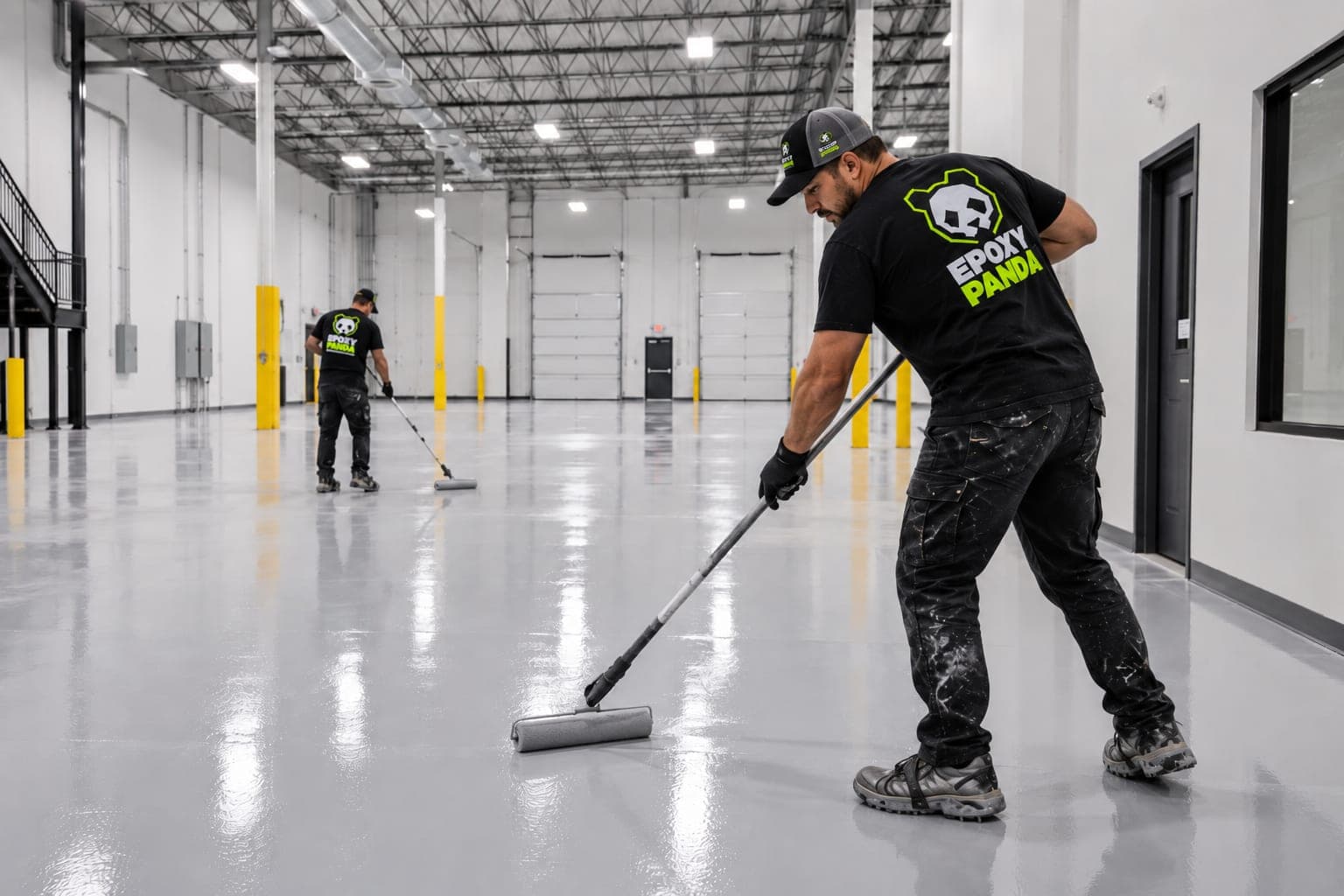
- Test and prepare the concrete. Existing coatings, sealers, contaminants and weak surface material are identified and removed as needed. The slab is mechanically profiled, typically with diamond grinding or other appropriate surface-preparation equipment, so the selected coating can bond to sound concrete.
- Address defects and transitions. Appropriate cracks, pits and damaged areas are repaired, and details such as joints, drains, curbs, doorways, equipment pads and transitions are handled according to the scope. Structural movement and active joints require different treatment than cosmetic surface defects.
- Install the specified base layer. The base coat or primer is chosen to match the substrate and intended system. Depending on the project requirements, the coating assembly may use epoxy, polyurea, polyaspartic or another compatible resin technology. Epoxy Panda commercial systems may use epoxy, polyaspartic, polyurea or hybrid assemblies, with topcoat chemistry selected around wear and exposure.
- Build the required finish. Decorative flake, aggregate, additional build coats, solid pigment or other system-specific layers are installed where specified. Commercial systems may prioritize cleanability, traction, wear resistance, appearance or a combination of those requirements.
- Apply the protective finish and inspect the floor. The final topcoat is selected around wear, cleaning, UV exposure where relevant and required surface texture. The completed floor is checked for coverage, transitions and finish consistency before the space returns to use. For most Epoxy Panda systems, light foot traffic is typically possible in approximately 12–24 hours and vehicle traffic in approximately 24–72 hours. Exact timing depends on coating chemistry, temperature, humidity and project conditions.
Benefits and trade-offs
- A coated concrete floor creates a more finished and easier-to-maintain surface than untreated concrete in many commercial environments.
- The coating system can be tailored to the space instead of forcing every facility into the same finish. Traffic, cleaning, traction and appearance can all influence the specification.
- Coatings can reduce concrete dusting and help protect the slab surface from routine wear and many common spills, but chemical resistance depends on the specific chemistry and exposure.
- A seamless or mostly seamless coating surface can simplify routine cleaning compared with porous bare concrete, although joints, drains and other building details still remain part of the floor.
- Higher texture can improve traction but also makes a surface more difficult to mop or squeegee than a smoother finish. The right balance depends on how the space is used.
- Gloss and decorative finishes can improve appearance, but highly reflective floors may make scratches, tire marks, dust or surface imperfections more visible in some environments.
- Heavy forklifts, steel wheels, dropped tools, welding activity, concentrated chemicals or dragging equipment can damage a coating. Commercial does not mean indestructible.
- Surface preparation can create noise, dust-management requirements and temporary disruption inside an operating facility. Scheduling and access need to be planned before work begins.
- Concrete moisture, structural movement or contaminated slabs can complicate a coating project and may require additional testing, preparation or a different system.
- Exterior-facing areas or spaces receiving substantial direct sunlight require UV exposure to be considered when selecting the finish chemistry.
What affects cost and timing
Planning range
Priced with a custom estimate based on your facility.
Planning estimate only. Pricing assumes a standard coating installation on reasonably sound concrete and includes mechanical grinding, minor routine repairs, base coat, full flake broadcast and protective topcoat where applicable. Existing coating removal, significant concrete repair, steps, vertical surfaces, specialty traction and other project-specific conditions may increase the final price. Your written estimate confirms the actual project price.
- Total square footage and whether the project is one open area or multiple rooms and sections.
- Concrete hardness, porosity and overall slab condition.
- Existing epoxy, paint, adhesive, sealer or other material that must be removed.
- Oil, grease, chemical or other contamination in the concrete.
- Cracks, pitting, spalling and repair requirements.
- Moisture conditions and whether additional slab evaluation is needed.
- Required coating thickness and total number of layers.
- Selected chemistry, finish and decorative system.
- Required traction level or aggregate broadcast.
- Exposure to oils, cleaners, chemicals or other operational substances.
- Forklift, vehicle, cart and equipment traffic requirements.
- Curbs, drains, stairs, ramps, equipment pads, vertical surfaces and other detailed areas.
- Furniture, shelving, inventory, machinery or other items that affect access to the floor.
- Whether the facility can be closed completely or the project must be phased around ongoing operations.
- Temperature, humidity and ventilation conditions during installation.
- Required return-to-service schedule for employees, customers, equipment or vehicles. Polyaspartic systems may allow faster return-to-service on appropriate projects.
Care and maintenance
Commercial coated floors should be cleaned on a schedule appropriate for the amount and type of traffic in the facility. Remove abrasive grit and debris regularly, because dirt tracked under wheels and shoes can act like sandpaper against the finish. Use cleaning products compatible with the installed coating and clean oil, chemicals and other spills promptly rather than allowing them to remain on the floor. High-traffic areas may eventually show more wear than surrounding sections, so periodic inspection helps identify areas that may need maintenance before damage progresses.
Questions about commercial floor coatings
What type of floor coating is best for a commercial building?
There is no single commercial coating that is best for every facility. The right system depends on traffic, chemicals, cleaning, traction, appearance, substrate condition and how quickly the area must return to service. A showroom may prioritize appearance and easy cleaning, while an automotive or maintenance facility may need greater texture and resistance to harder daily use.
Can commercial floor coatings handle forklifts and vehicle traffic?
Some commercial coating systems are suitable for vehicle and equipment traffic when the system and concrete are properly evaluated. The expected wheel type, load, turning patterns and frequency of traffic should be considered before selecting the coating. Heavy point loads, steel wheels and repeated tight forklift turns can be much more demanding than normal passenger-vehicle traffic.
Can you coat a commercial floor without shutting down the entire facility?
Some projects can be completed in phases, but whether that is practical depends on the layout, coating system and how the facility operates. Traffic must be kept off areas that are being prepared, coated or curing. For an operating business, the project should be planned around access routes, equipment movement and the required return-to-service schedule.
Are commercial floor coatings resistant to chemicals?
Chemical resistance varies significantly by coating chemistry and by the specific chemical involved. The substances used or stored in the facility should be identified before the system is specified. Concentration, temperature, contact time and cleaning practices can all affect how a coating responds to chemical exposure.
Can you make a commercial coated floor less slippery?
Yes, surface texture or traction additives can be incorporated into many commercial coating systems. More aggressive texture can improve traction but usually makes the floor harder to clean than a smoother surface. The appropriate texture should be based on whether the area stays dry, gets wet, receives vehicle traffic or has other slip concerns.
Related services

Ready for a Better Floor?
Tell us about your project and we'll help you determine the right coating system for your space.