
Service
Concrete Grinding & Preparation
Concrete grinding and preparation is the mechanical process used to remove weak surface material, existing coatings and contaminants while creating the profile required for a new floor coating. Epoxy Panda performs concrete surface preparation for residential and commercial coating projects throughout Dallas–Fort Worth.
Best for
- Concrete receiving a new resin coating system.
- Floors with old paint, sealers or compatible coatings that need to be removed before recoating.
- Slabs with minor surface irregularities, laitance or weak surface material.
- Residential and commercial projects where proper coating adhesion depends on exposing sound concrete.
How it works
- Inspect the slab before grinding. Existing coatings, adhesives, contamination, cracks, spalls, moisture concerns and other conditions are identified so the correct preparation approach can be selected.
- Select the grinding equipment and tooling. Diamond tooling is chosen according to concrete hardness, existing material and the surface profile needed for the next coating system. Different slabs and coatings can require different tooling rather than one universal grinding setup.
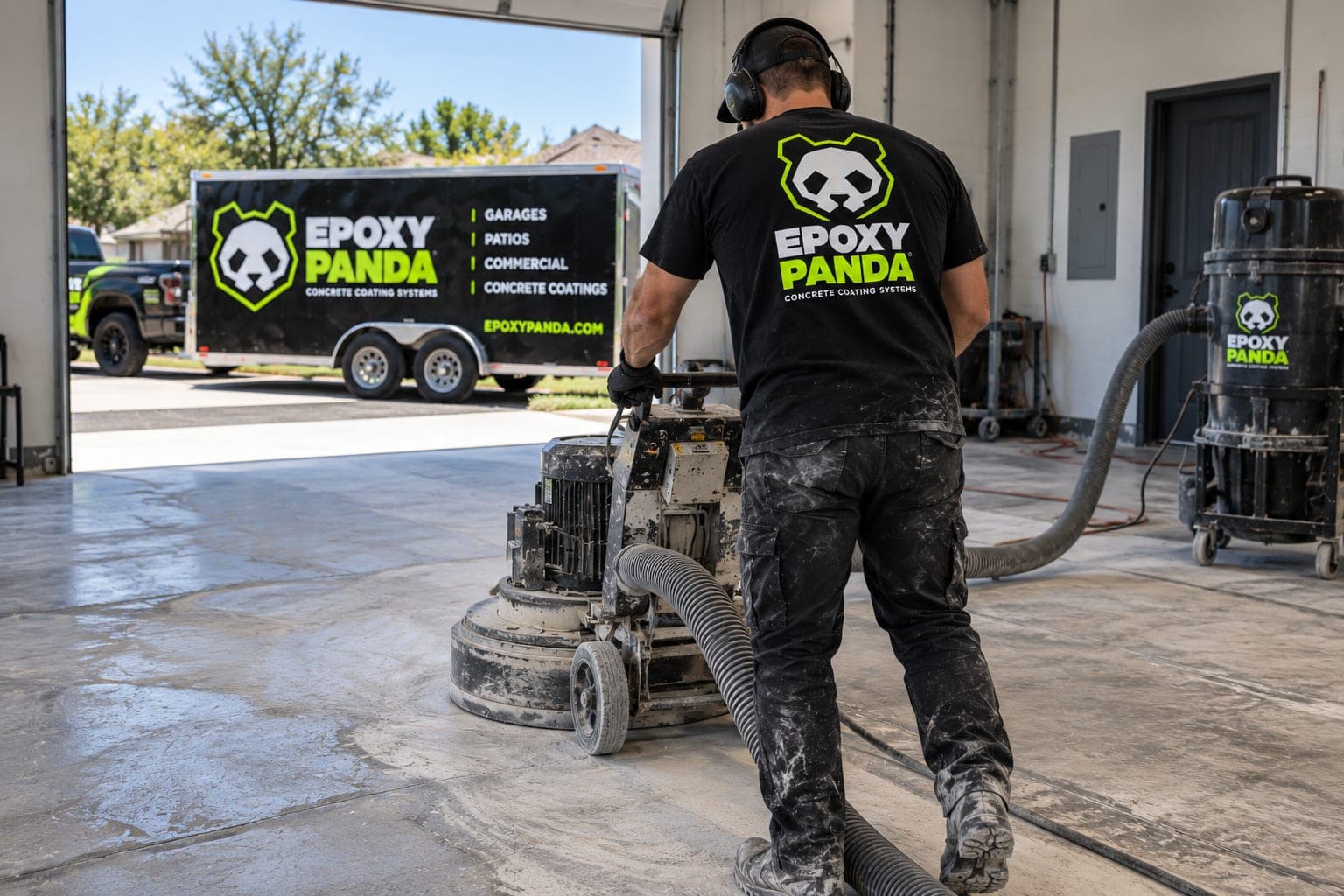
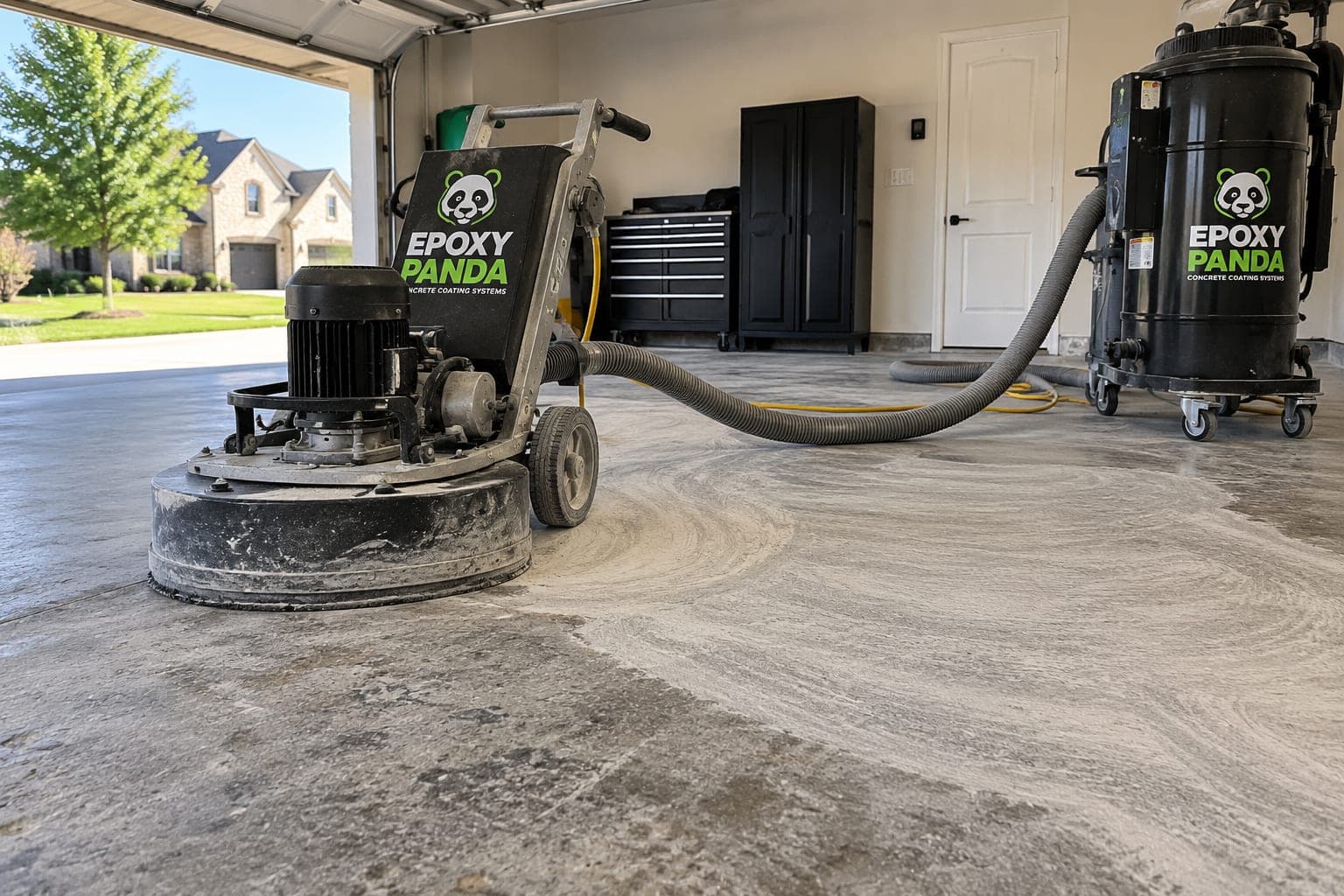
- Mechanically grind the concrete. The equipment removes the upper surface layer along with appropriate coatings, contaminants and weak material while opening the concrete surface. Edge grinders and smaller equipment are used where larger machines cannot reach.
- Control and remove grinding dust. Grinding equipment is normally connected to suitable dust collection, but the prepared floor still requires detailed vacuuming and cleaning before coatings are installed.
- Perform required repairs after the surface is exposed. Grinding can reveal cracks, pitting, previous repairs and other defects that were difficult to evaluate beforehand. Suitable defects are repaired or addressed according to the planned coating system.
- Inspect the prepared surface before coating. The floor is checked for remaining contamination, incompatible material and preparation consistency before the next layer is installed.
Benefits and trade-offs
- Mechanical grinding physically prepares the concrete instead of relying only on chemical cleaning to create a bondable surface.
- Grinding can remove many existing paints, coatings, sealers and weak surface materials, although difficult materials may require multiple passes or specialized tooling.
- The process exposes the actual condition of the slab, which helps identify cracks and damaged areas before they are buried beneath a new coating.
- Grinding can improve minor surface inconsistencies but should not be confused with full concrete leveling or structural slab correction.
- Removing a thick or exceptionally durable existing coating can require substantially more preparation than working with bare concrete.
- Oil and other contaminants can penetrate deeper than the material visible at the surface. Grinding alone does not guarantee removal of deeply absorbed contamination.
- Mechanical preparation produces dust and noise, so professional dust collection and site management are important.
- Grinding equipment cannot reach every corner, edge or detail with the same machine, which is why edge preparation is a separate part of the work.
- The goal is not to make the concrete visually polished. For coating work, the objective is to create a surface profile appropriate for adhesion.
- Structural cracks, active moisture problems and serious slab movement are not solved simply by grinding the surface.
What affects cost and timing
Planning range
Typically $2–$2.25 per sq. ft.
Planning estimate only. Pricing assumes a standard coating installation on reasonably sound concrete and includes mechanical grinding, minor routine repairs, base coat, full flake broadcast and protective topcoat where applicable. Existing coating removal, significant concrete repair, steps, vertical surfaces, specialty traction and other project-specific conditions may increase the final price. Your written estimate confirms the actual project price.
- Total square footage.
- Concrete hardness.
- Condition of the slab.
- Type and thickness of existing coatings.
- Number of existing coating layers.
- Adhesive, paint or sealer removal requirements.
- Oil, grease or other contamination.
- Amount of edge and detail grinding required.
- Accessibility for larger grinding equipment.
- Crack, pit and spall repair requirements.
- Required surface profile for the coating that will follow.
- Whether the space contains fixed equipment or other obstructions.
- Dust-control and containment requirements.
- Moisture or other substrate conditions discovered during preparation.
Care and maintenance
Grinding is normally a preparation step rather than the final finished floor, so the prepared concrete should be protected from new contamination before the coating is installed. Do not apply household sealers, cleaners that leave residue or other products to freshly prepared concrete unless they are part of the specified system. Oil, water and construction debris should be kept off the prepared surface. If the floor remains exposed for an extended period, it may need to be cleaned or re-evaluated before coating.
Questions about concrete grinding & preparation
Why grind concrete before installing a floor coating?
Grinding removes weak or incompatible surface material and creates a profile that allows the coating to bond to the concrete. Adhesion begins with the substrate, so preparation is one of the most important parts of the installation. Simply cleaning a smooth or sealed slab does not create the same mechanical profile.
Is concrete grinding the same as polishing?
No. Grinding for coating preparation is intended to create a bondable surface, while concrete polishing progressively refines the slab to produce a finished exposed-concrete surface. The equipment may look similar, but the objectives and tooling sequence are different.
Can grinding remove an old epoxy coating?
Many existing resin coatings can be mechanically removed, but the difficulty varies with coating type, thickness and bond strength. Some floors require specialized tooling or additional preparation passes. The existing floor needs to be evaluated before the required removal work can be determined.
Does grinding repair cracks?
No. Grinding exposes and prepares the surface, while cracks and damaged areas require separate repair procedures where appropriate. Grinding can make hidden defects easier to identify before repairs and coatings are installed.
Related services

Ready for a Better Floor?
Tell us about your project and we'll help you determine the right coating system for your space.