
Service
Metallic Epoxy
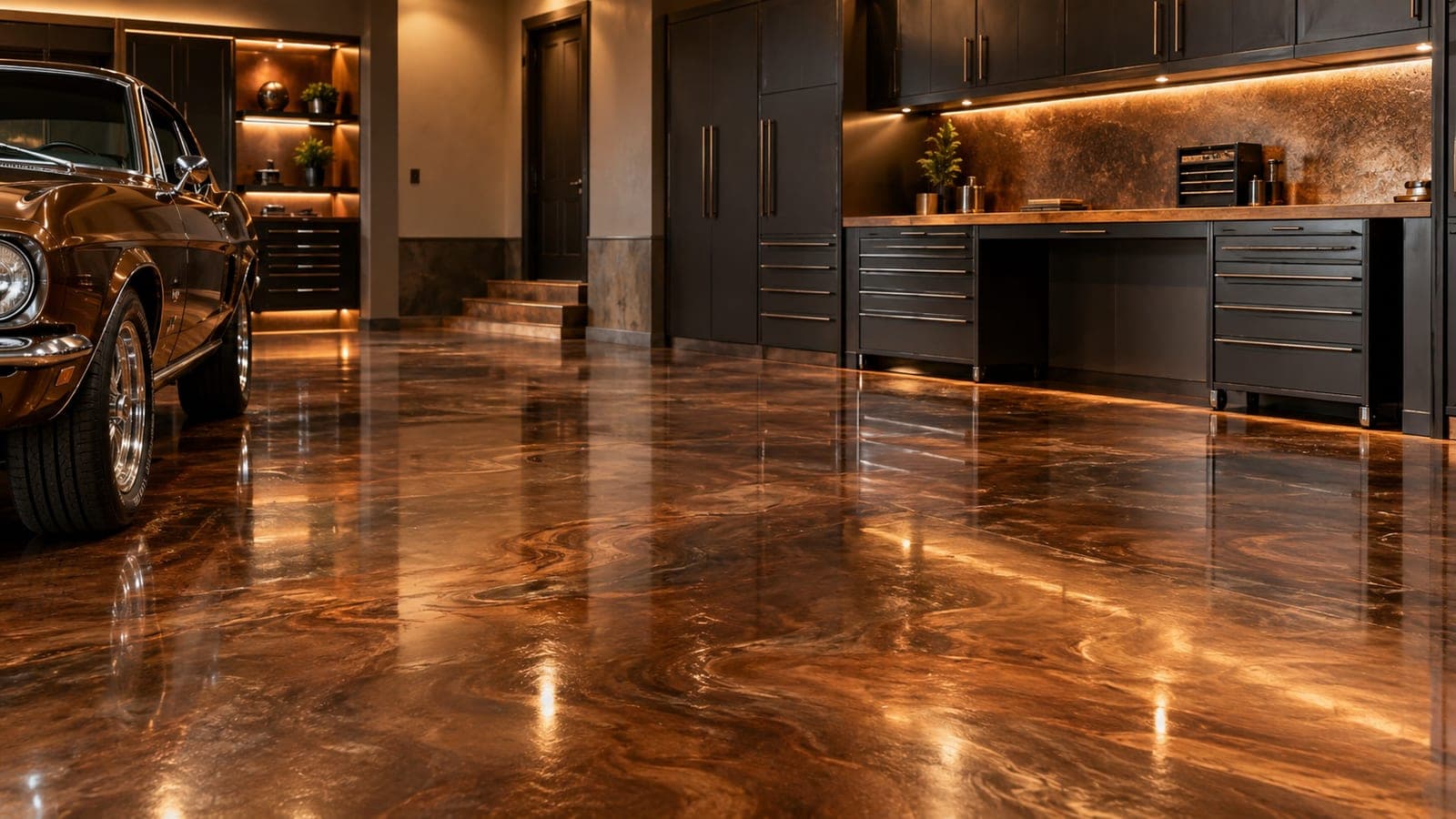
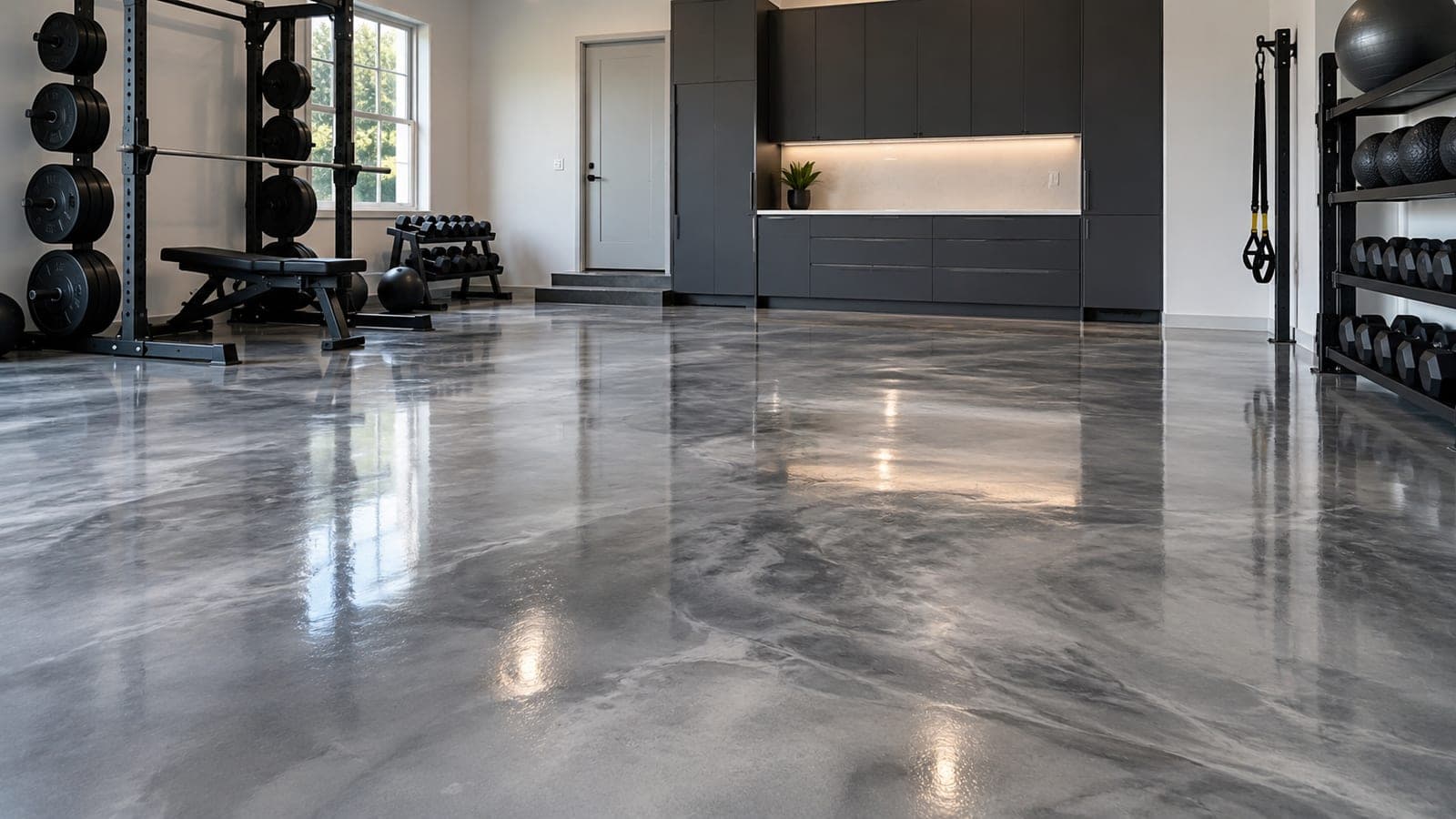
Metallic epoxy is a decorative resin flooring system that uses metallic pigments suspended in epoxy to create flowing, dimensional patterns for residential and commercial interiors. Epoxy Panda installs metallic epoxy floors throughout Dallas–Fort Worth for customers who want a highly decorative finish rather than the uniform appearance of conventional floor coatings.
Best for
- Interior residential spaces where the floor is intended to become a major visual feature.
- Showrooms, retail spaces, studios and other commercial interiors where appearance matters as much as basic floor protection.
- Customers who prefer flowing, stone-like or abstract patterns instead of decorative flake or a single solid color.
- Concrete floors that can be properly prepared and leveled enough for the metallic effect to develop consistently.
How it works
- Inspect and mechanically prepare the concrete. Existing coatings, sealers, contaminants and weak surface material are removed as needed, and the concrete is mechanically profiled so the coating system can bond to sound concrete.
- Repair and refine the substrate. Cracks, pits, spalls and other appropriate defects are repaired before the decorative layers are installed. Metallic finishes can emphasize surface irregularities, so substrate preparation and flatness are particularly important.
- Apply a compatible primer or base coat. A uniform foundation helps seal the prepared concrete and establish the background color for the metallic design. The selected base color can significantly influence the appearance of the finished floor.
- Mix metallic pigments into the epoxy. Metallic powders or pigments are dispersed into the resin according to the desired color combination. Multiple colors can be used to create greater depth and movement. Epoxy Panda metallic color families include silver/pearl, charcoal/graphite, black, bronze, copper, blue/steel blue, white/silver and gray/smoke, with custom two- and three-color combinations available.
- Place and manipulate the metallic epoxy while it is wet. The material may be poured, ribboned, rolled, squeegeed or otherwise moved across the surface to create the intended pattern. The pigments continue to move and react while the epoxy remains fluid, which is why no two metallic floors are exactly identical.
- Apply the protective finish after the decorative epoxy has cured sufficiently. A compatible clear topcoat can be used to improve wear characteristics, cleanability, sheen and other performance properties. Epoxy Panda finishes metallic floors with a compatible protective topcoat.
Benefits and trade-offs
- Metallic epoxy can create dramatic depth and movement that cannot be duplicated with a conventional solid-color coating.
- Every metallic installation is inherently unique because pigment movement occurs while the material is flowing and curing.
- The seamless decorative surface works particularly well where the floor is intended to be part of the interior design.
- Metallic epoxy can resemble flowing stone, smoke, marble or other abstract effects, but it should not be expected to reproduce natural stone exactly.
- The installer can influence the pattern, but the finished design cannot be controlled with the precision of a printed product. Customers should expect variation rather than an exact duplicate of a sample image.
- Dark, glossy metallic floors can show dust, scratches, footprints and surface contamination more readily than heavily patterned flake systems.
- Highly reflective finishes may reveal slab imperfections that are less noticeable on textured or multicolor flooring.
- Epoxy chemistry is generally better suited to protected interior environments than prolonged direct UV exposure unless the complete system has been specifically designed for that exposure.
- Metallic floors can be durable when properly installed and protected, but decorative appearance does not make the surface immune to gouges, heavy impacts or aggressive chemicals.
- Repairing a small damaged section can be visually difficult because recreating the exact surrounding pigment movement is rarely possible.
What affects cost and timing
Planning range
Typically $13–$16 per sq. ft.
Planning estimate only. Pricing assumes a standard coating installation on reasonably sound concrete and includes mechanical grinding, minor routine repairs, base coat, full flake broadcast and protective topcoat where applicable. Existing coating removal, significant concrete repair, steps, vertical surfaces, specialty traction and other project-specific conditions may increase the final price. Your written estimate confirms the actual project price.
- Total square footage and room layout.
- Condition and flatness of the existing concrete.
- Amount of mechanical preparation required.
- Existing coatings or adhesives that must be removed.
- Crack, pit and surface-repair requirements.
- Number of metallic colors used in the design.
- Complexity of the desired decorative effect.
- Primer and background-color requirements.
- Thickness and number of resin layers.
- Selected clear topcoat and finish.
- Edges, stairs and detailed transitions.
- Moisture conditions in the slab.
- Temperature and humidity during installation and curing.
- Required return-to-service schedule. For most Epoxy Panda systems, light foot traffic is typically possible in approximately 12–24 hours and vehicle traffic in approximately 24–72 hours. Exact timing depends on coating chemistry, temperature, humidity and project conditions.
Care and maintenance
Remove abrasive dirt and grit regularly with a soft broom, dust mop or vacuum so particles are not repeatedly ground against the clear finish. Clean the floor with water and a mild cleaner compatible with the installed coating, and avoid abrasive pads that can dull a glossy surface. Wipe up chemicals, oils and strongly colored spills promptly. Furniture, equipment and other heavy objects should use appropriate protective feet or pads where scratching is a concern.
Questions about metallic epoxy
Will my metallic epoxy floor look exactly like the sample?
No. Metallic epoxy creates a one-of-a-kind pattern, so a sample can establish the color direction but cannot guarantee an identical design. Pigments move within the wet epoxy as the material is placed and manipulated, producing natural variation across every installation.
Is metallic epoxy actually made with metal?
The visual effect comes from fine metallic or pearlescent pigments suspended in the epoxy resin. These pigments reflect light and move within the wet coating to create depth and variation. The finished floor is still a resin coating system rather than a sheet of metal.
Can metallic epoxy be used in a garage?
It can be used in some garage applications, but the desired appearance and actual garage use should be considered carefully. A glossy decorative finish may show tire marks, dirt and scratches more readily than a full-flake system. Direct sunlight near an open garage door also needs to be considered when selecting the complete coating and topcoat system.
Is metallic epoxy slippery?
A smooth glossy metallic finish can become slippery when wet. Traction additives or a more textured protective topcoat can be considered when slip resistance is important. Adding texture can slightly change the clarity and visual depth of the decorative finish.
Can metallic epoxy be installed outdoors?
Metallic epoxy is generally most appropriate for protected interior spaces unless the complete system is specifically designed for outdoor exposure. North Texas UV and heat make exterior coating selection especially important. For patios and other exposed concrete, an exterior-specific coating system is usually the better starting point.
What finish does metallic epoxy have?
Gloss is the standard finish for metallic epoxy because it best showcases the depth, movement and color variation in the metallic pigments. Satin may be available on appropriate systems when a lower-reflectivity finish is preferred.
Related services

Ready for a Better Floor?
Tell us about your project and we'll help you determine the right coating system for your space.