
Service
Patio & Outdoor Concrete Coatings
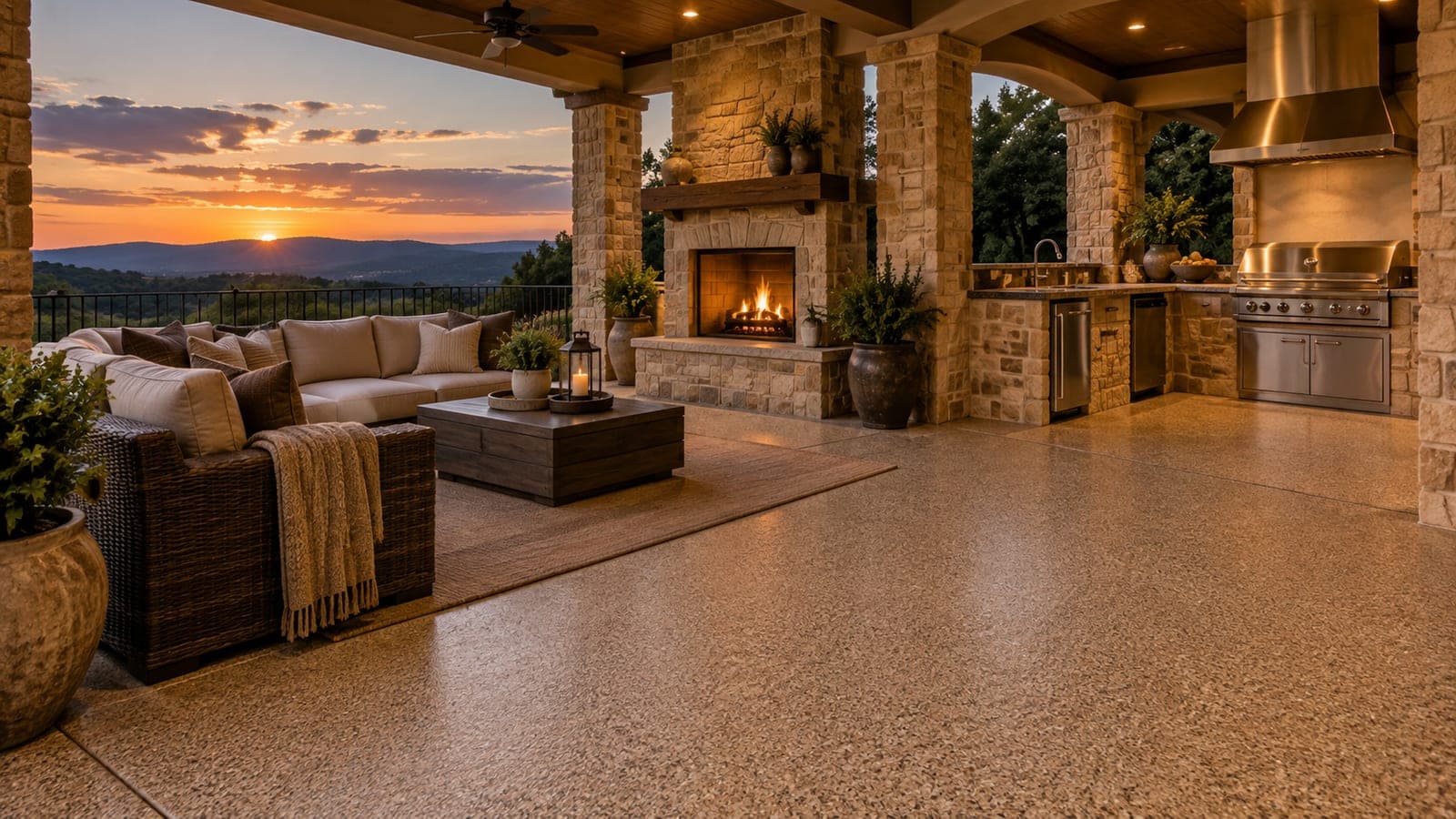
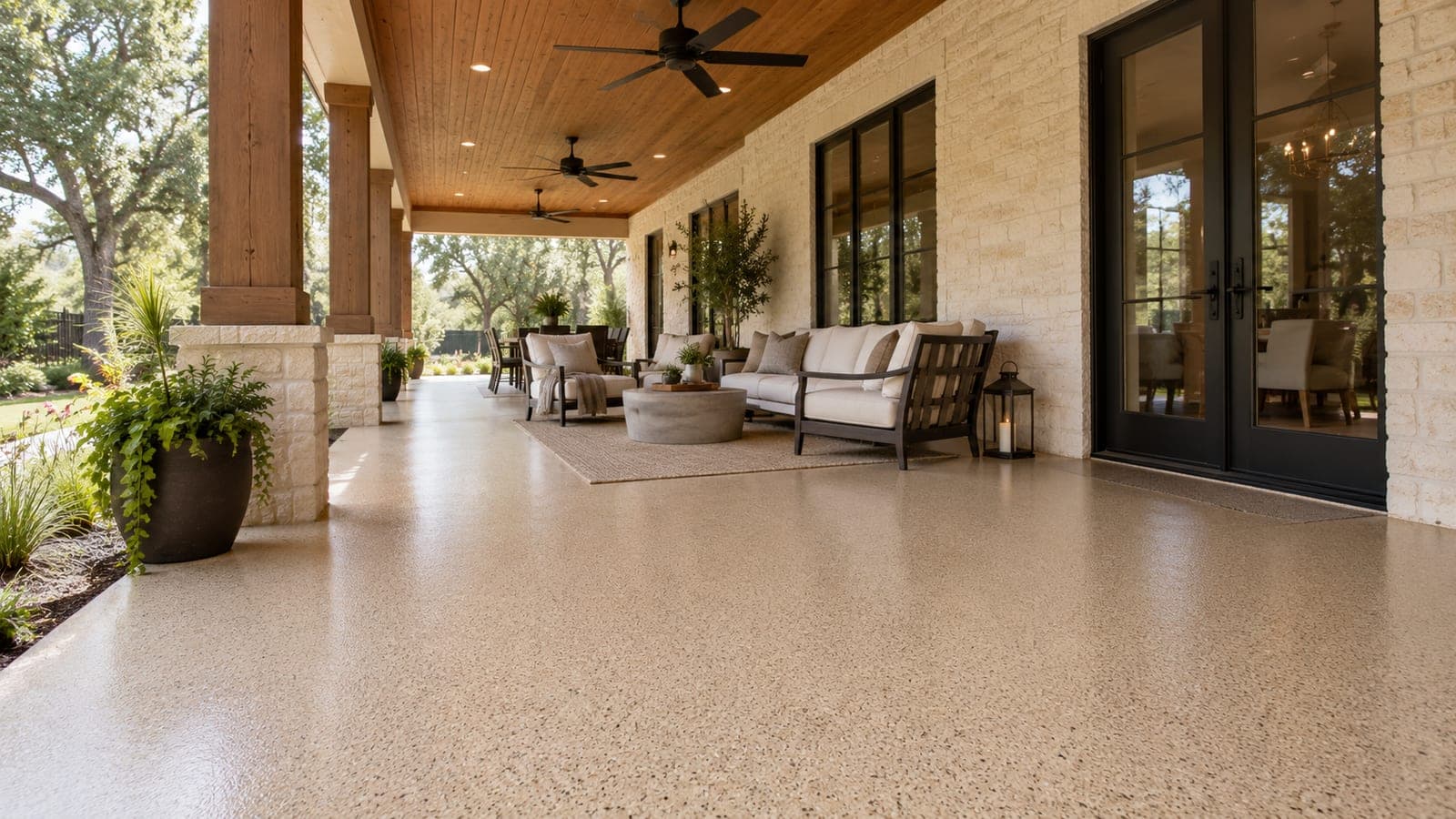
Patio and outdoor concrete coatings are exterior-rated surface systems for homeowners who want to improve the appearance, cleanability and finish of patios, porches and other suitable outdoor concrete. Epoxy Panda installs outdoor concrete coating systems throughout Dallas–Fort Worth with particular attention to UV exposure, weather, drainage and traction.
Best for
- Covered or uncovered concrete patios that need a more finished appearance.
- Porches and outdoor living spaces where bare concrete is difficult to keep clean or visually inconsistent.
- Exterior concrete where UV stability and wet-surface traction are important design requirements.
- Homeowners who want decorative color or texture without covering the concrete with tile or another separate flooring material.
How it works
- Evaluate the outdoor slab and exposure. Sunlight, shade, drainage, moisture, cracks, previous sealers, surrounding landscaping and how the surface gets wet are considered before selecting an exterior-compatible system.
- Mechanically prepare the concrete as required. Existing coatings, weak material and incompatible sealers are removed, and the surface is profiled for the selected coating. Exterior preparation must also account for contamination from weather, soil and organic material.
- Address appropriate cracks and damaged areas. Pitting, spalls and suitable cracks are repaired while recognizing that exterior slabs experience temperature changes and movement that can cause cracks to return.
- Apply an exterior-compatible base system. The chemistry must be selected for the actual exposure rather than assuming a conventional interior epoxy system is appropriate outdoors. Epoxy Panda installs a UV-stable exterior coating system for patios and outdoor concrete.
- Add the specified decorative treatment and traction. Depending on the system, this may include decorative flake, pigment or another exterior-compatible finish. Texture is particularly important on surfaces exposed to rain or pool water.
- Apply the specified UV-stable protective finish where the system requires one. Exterior topcoat selection should account for sunlight, weather, abrasion and the amount of texture needed for safe everyday use.
Benefits and trade-offs
- An exterior coating can give plain concrete a more deliberate, finished appearance and make routine cleaning easier.
- Decorative color and texture can visually connect a patio or porch with the surrounding outdoor living space.
- Exterior floors can be designed with more traction than a smooth indoor decorative floor, which is important where rain or water is expected.
- North Texas sunlight is intense, so UV stability matters. A coating that performs well inside a garage is not automatically suitable for an exposed patio.
- Dark surfaces can become significantly warmer in direct sun than lighter finishes.
- More aggressive traction can improve wet grip but also traps more dirt and may require brushing instead of simple mopping.
- Outdoor slabs experience changing temperatures, moisture and environmental exposure. Existing cracks may continue moving after they have been repaired.
- Poor drainage cannot be fixed by a coating alone. Standing water, drainage direction and low areas should be evaluated separately.
- Leaves, soil, irrigation water and organic debris can stain or dirty exterior surfaces and still require routine cleaning.
- Coatings cannot correct severe slab settlement, major structural movement or persistent moisture conditions simply by covering them.
What affects cost and timing
Planning range
Typically $8–$9 per sq. ft.
Planning estimate only. Pricing assumes a standard coating installation on reasonably sound concrete and includes mechanical grinding, minor routine repairs, base coat, full flake broadcast and protective topcoat where applicable. Existing coating removal, significant concrete repair, steps, vertical surfaces, specialty traction and other project-specific conditions may increase the final price. Your written estimate confirms the actual project price.
- Total outdoor square footage.
- Covered versus fully exposed location.
- Amount of direct sunlight.
- Existing paint, coating or sealer removal.
- Concrete condition.
- Crack and surface repairs.
- Drainage and standing-water conditions.
- Selected exterior coating chemistry.
- Decorative flake, pigment or finish selection.
- Required traction level.
- Steps, edges and vertical surfaces.
- Access to the patio or outdoor area.
- Weather conditions during installation.
- Temperature and humidity.
- Required cure and return-to-service conditions. For most Epoxy Panda systems, light foot traffic is typically possible in approximately 12–24 hours and vehicle traffic in approximately 24–72 hours. Exact timing depends on coating chemistry, temperature, humidity and project conditions.
Care and maintenance
Sweep or rinse loose dirt, leaves and grit from outdoor coated surfaces regularly so debris does not accumulate in the texture. Use a mild cleaner compatible with the installed system and a soft-bristle brush when textured areas require more agitation. Clean organic stains, spills and other contamination before they remain on the surface for extended periods. Periodically inspect exposed areas for unusual wear, impact damage or movement around existing cracks and joints.
Questions about patio & outdoor concrete coatings
Can regular epoxy be used on an outdoor patio?
A coating should not be selected for outdoor use simply because it is called epoxy. Exterior surfaces need a complete system chosen specifically for UV exposure, temperature changes, moisture and weather. Some resin chemistries and topcoats are substantially better suited to sunlight than others.
Will an outdoor concrete coating fade in the Texas sun?
UV exposure can affect coatings differently, so exterior systems should use chemistry selected for sunlight resistance. No finish should be described as immune to all long-term weathering without product-specific evidence. North Texas sun is one reason exterior coating selection differs from an indoor garage application.
Are coated patios slippery when it rains?
They can be if the finish is too smooth, which is why traction should be considered when specifying an outdoor system. Texture or compatible traction material can be incorporated to improve wet-surface grip. More texture improves traction but usually requires more effort to clean.
Can you coat a cracked patio?
Many nonstructural cracks can be repaired before coating, but repair does not prevent future slab movement. Exterior concrete expands, contracts and moves, so an existing crack can potentially become visible again. Major movement or settlement should be evaluated before a coating is installed.
Can outdoor coatings handle standing water?
A coating system may tolerate occasional water exposure, but persistent standing water usually indicates a drainage issue that should be evaluated separately. Coating a low spot does not change the slope of the slab. Drainage conditions should be identified before installation.
Related services

Ready for a Better Floor?
Tell us about your project and we'll help you determine the right coating system for your space.