
Service
Garage Floor Coatings
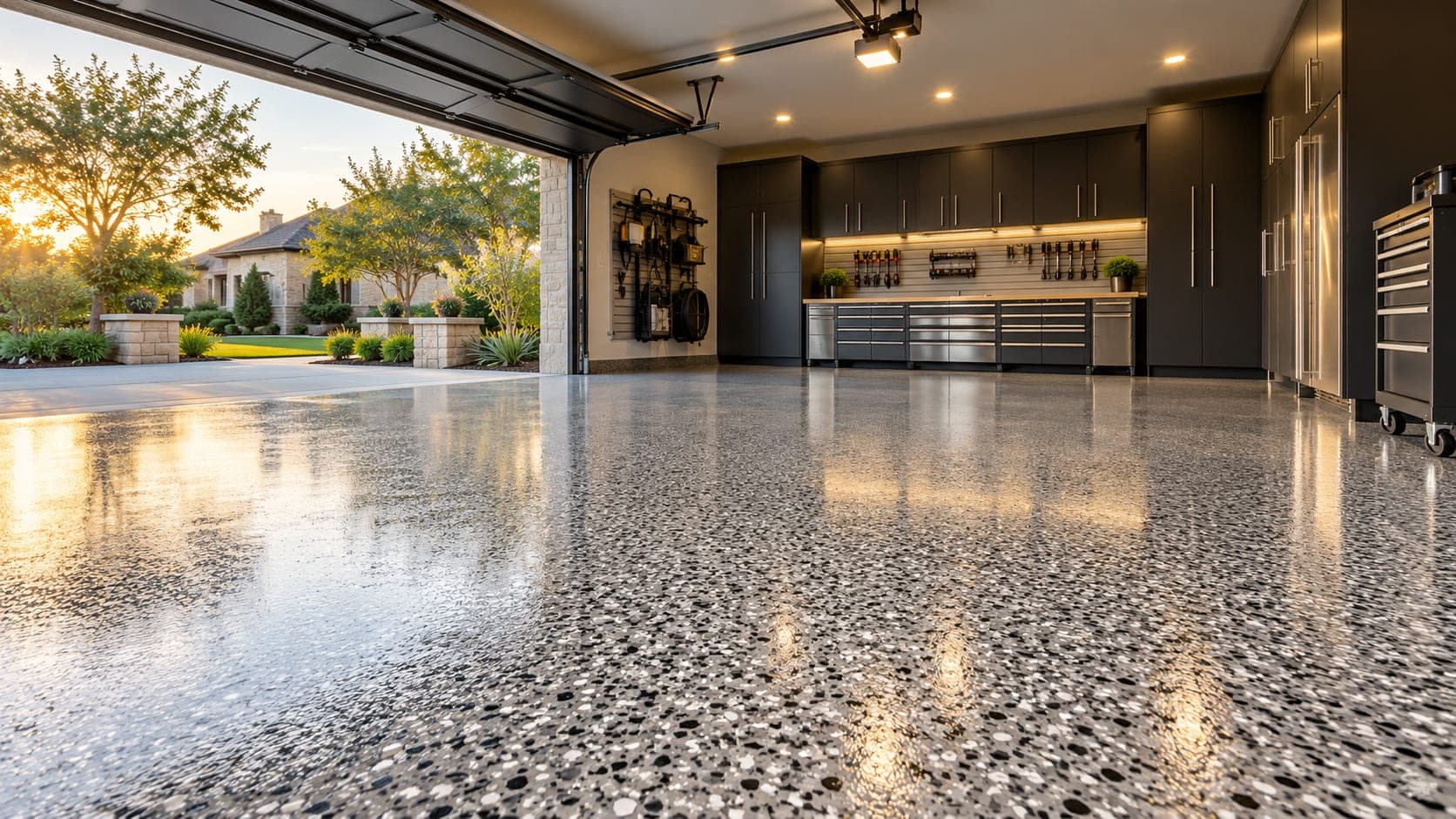
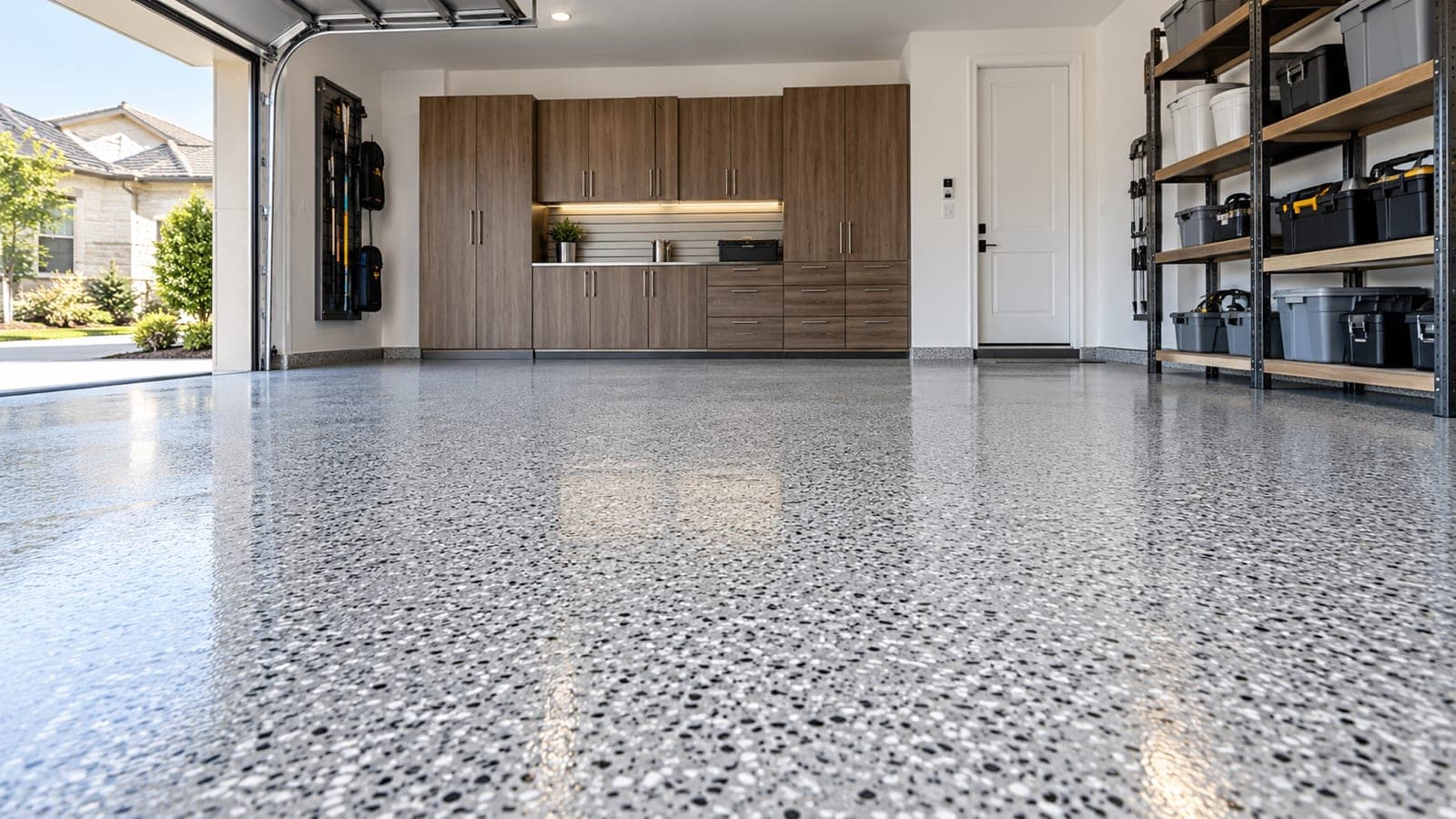
Garage floor coatings are protective systems installed over concrete for homeowners who want a cleaner, more durable and finished garage floor. Epoxy Panda installs garage floor coating systems throughout Dallas–Fort Worth, with the coating and finish selected around the slab condition, garage use, appearance goals and exposure conditions.
Best for
- Residential garages where bare concrete is dusty, stained or difficult to maintain.
- Homeowners who want a finished garage that visually feels like part of the home rather than an unfinished utility space.
- Garages used for vehicles, storage, workshops, home gyms or other everyday household activities.
- Concrete floors that are suitable for coating after proper mechanical preparation and any necessary surface repairs.
How it works
- Inspect the concrete. The slab is evaluated for its overall condition, existing coatings or sealers, cracks, pitting, contamination and other issues that could affect adhesion. Signs of excessive moisture or structural movement may require additional evaluation before a coating system is installed.
- Mechanically profile the surface. The concrete is prepared using mechanical equipment such as diamond grinding to remove weak surface material, contaminants and incompatible existing coatings while creating the surface profile required for the selected coating system. Coating over smooth or poorly prepared concrete can lead to premature adhesion problems.
- Repair appropriate surface defects. Cracks, pits, spalls and damaged areas that can reasonably be repaired are addressed after preparation. Crack repair improves the finished appearance and provides a better coating surface, but repairs do not guarantee that moving cracks will never become visible again.
- Apply the selected coating system. A compatible base coat is installed according to the chosen system and the condition of the concrete. Depending on the project, this may involve epoxy, polyurea, polyaspartic or another compatible coating chemistry. Epoxy Panda’s standard garage system uses a resin base coat (epoxy or polyurea), a full decorative flake broadcast and a polyaspartic clear topcoat. Depending on the project, the system may also use polyaspartic throughout or a hybrid combination.
- Add the decorative finish when specified. For flake systems, decorative vinyl flakes are broadcast into the wet coating. The amount of flake, color blend and coverage level affect the final appearance and texture.
- Scrape, clean and apply the protective topcoat. After the decorative layer is ready, excess material is removed and the surface is prepared for the final clear or pigmented protective coat. The topcoat is selected around wear, cleanability, desired sheen, traction and exposure conditions. Epoxy Panda’s standard topcoat is a polyaspartic clear.
Benefits and trade-offs
- Garage coatings create a sealed, finished surface that is generally easier to sweep, vacuum and mop than unfinished concrete.
- A properly selected coating can reduce concrete dusting and provide a more consistent appearance across the garage floor.
- Decorative flake systems can help visually disguise minor dirt, small imperfections and everyday wear better than a perfectly uniform solid-color surface.
- Coatings provide a protective wear surface, but they are not indestructible. Heavy impacts, dragging sharp metal objects, aggressive chemicals and abusive use can damage a finished floor.
- Surface preparation matters as much as the coating itself. A premium coating installed over poorly prepared concrete can still fail.
- Existing cracks may be repaired before coating, but concrete continues to move. A repaired crack can sometimes reappear or telegraph through the finished system.
- Glossy finishes can become slippery when wet. Texture can be incorporated where additional traction is important.
- Garages with strong direct sunlight at an open door need a system selected with UV exposure in mind. Some coating chemistries are more resistant to yellowing and color change than others.
- Coating cannot correct every concrete problem. Active moisture transmission, structural movement or severely deteriorated concrete may require additional work before installation.
What affects cost and timing
Planning range
Use the planning calculator for an estimate based on your garage size, or request a free estimate.
Standard garage pricing includes
- Mechanical diamond grinding
- Standard concrete surface preparation
- Minor routine crack and pit repair
- Pigmented base coat
- Full decorative flake broadcast
- Protective clear topcoat
May add to the price
- Existing paint or coating removal
- Significant crack or spall repair
- Oil or chemical contamination
- Steps
- Stem walls or other vertical surfaces
- Cove base
- Additional traction
- Specialty or custom flake blends
- Difficult access
- Moisture-related remediation
- Specialty or additional topcoats
Planning estimate only. Pricing assumes a standard coating installation on reasonably sound concrete and includes mechanical grinding, minor routine repairs, base coat, full flake broadcast and protective topcoat where applicable. Existing coating removal, significant concrete repair, steps, vertical surfaces, specialty traction and other project-specific conditions may increase the final price. Your written estimate confirms the actual project price.
- Total garage square footage and overall layout.
- Condition and hardness of the existing concrete.
- Existing paint, sealer, epoxy or other material that must be removed.
- Amount of grinding or surface preparation required.
- Crack, pitting, spall or joint repair requirements.
- Moisture conditions in the slab.
- Selected coating chemistry and number of layers.
- Decorative flake coverage, color blend and finish selection.
- Desired traction level and surface texture.
- Edges, stem walls, steps, curbs or other vertical surfaces included in the project.
- Temperature, humidity and other environmental conditions that affect coating application and cure behavior.
- How quickly the garage needs to return to foot traffic, storage or vehicle use. For most Epoxy Panda systems, light foot traffic is typically possible in approximately 12–24 hours and vehicle traffic in approximately 24–72 hours. Exact timing depends on coating chemistry, temperature, humidity and project conditions.
Care and maintenance
Regular maintenance is straightforward: remove loose grit with a soft broom, dust mop or vacuum, then clean the floor with water and a mild cleaner appropriate for the coating. Wipe up automotive fluids, chemicals and other spills rather than allowing them to remain on the surface for extended periods. Avoid routinely dragging metal equipment, overloaded shelving or sharp objects across the floor because they can scratch or gouge the topcoat. If a specific cleaner, degreaser or chemical will be used frequently, confirm that it is compatible with the installed coating system.
Questions about garage floor coatings
What type of coating should I use on my garage floor?
The right system depends on the concrete, how you use the garage and the finish you want. Epoxy, polyurea, polyaspartic and hybrid systems have different characteristics, so the system should be selected for the actual project rather than by product name alone.
Do you have to grind a garage floor before coating it?
Mechanical preparation is generally an important part of a professional coating installation. Diamond grinding removes weak or incompatible surface material and creates a profile that allows the coating system to bond properly to the concrete.
Can you coat over an existing painted or epoxy garage floor?
Sometimes, but the existing material cannot simply be assumed to be a sound foundation. Loose, failing or incompatible coatings typically need to be mechanically removed so the new system can bond to properly prepared concrete.
Will a garage floor coating hide cracks in my concrete?
Repairs can improve the appearance of many cracks, but a coating does not stop the concrete from moving. Existing or future movement can cause a repaired crack to become visible again, especially where the slab continues to shift.
Will sunlight coming through my garage door damage the coating?
Sun exposure matters because coating chemistries differ in UV stability. Garages receiving strong North Texas sunlight near the door should use a system and topcoat selected with UV exposure and potential color change in mind.
Related services

Ready for a Better Floor?
Tell us about your project and we'll help you determine the right coating system for your space.