Service
Solid Color Coatings
Solid color coatings are pigmented concrete coating systems that create a clean, uniform floor without decorative flake or metallic effects. Epoxy Panda installs solid color systems for residential and commercial spaces throughout Dallas–Fort Worth where simplicity, visibility and a consistent finish are priorities.
Best for
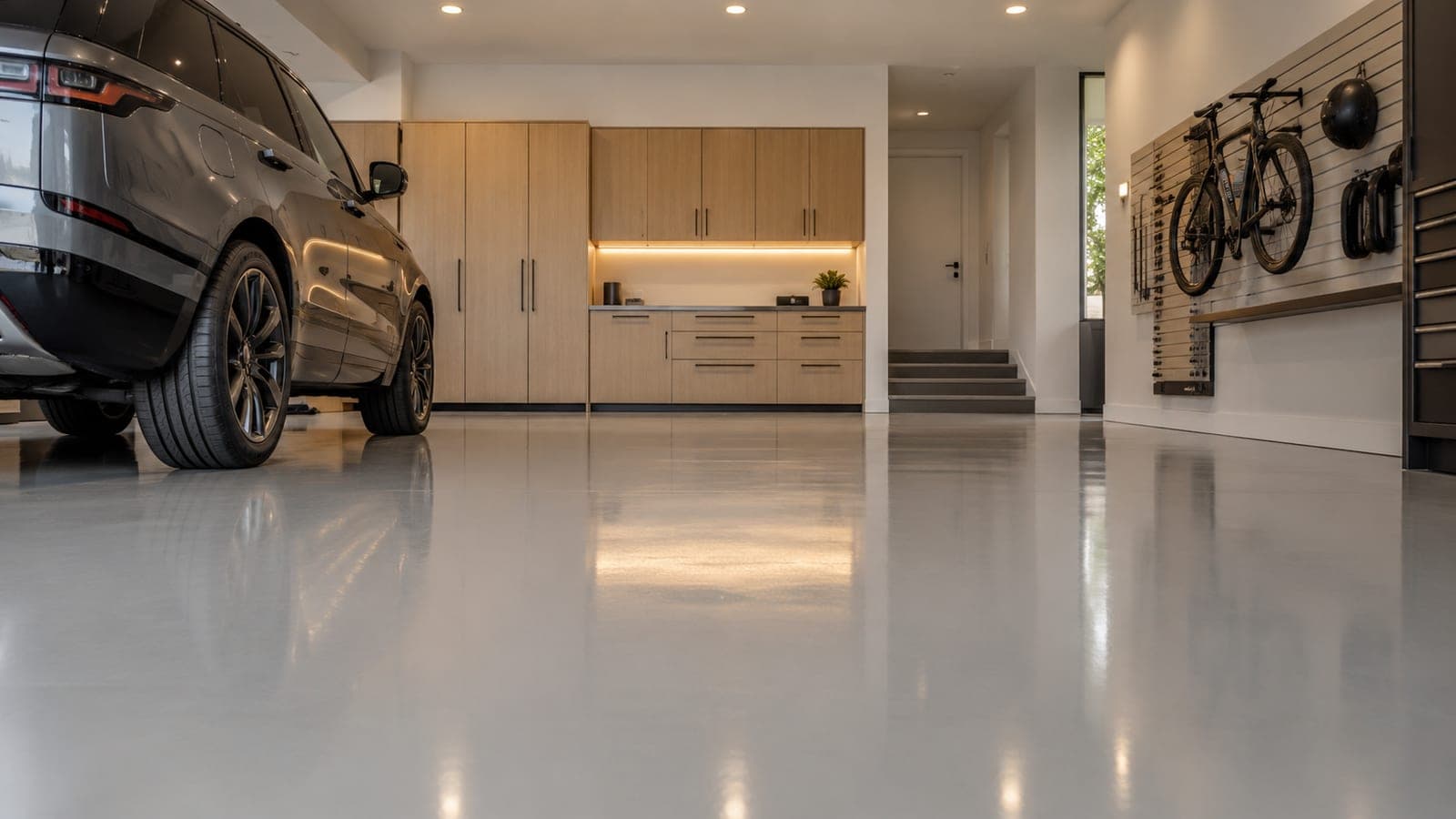
- Garages, utility spaces and workshops where a clean single-color appearance is preferred.
- Commercial floors where a consistent color supports a simple, professional appearance.
- Work areas where objects, dropped hardware or debris need to remain easy to see against the floor.
- Customers who prefer minimal visual pattern rather than full-flake or metallic finishes.
How it works
- Inspect and mechanically prepare the concrete. The slab is checked for existing coatings, sealers, contamination and defects before being mechanically profiled, commonly through diamond grinding.
- Repair appropriate cracks and damaged areas. Pits, spalls and suitable cracks are repaired so they do not create unnecessary defects in the uniform finished surface.
- Apply any required primer. The need for a primer depends on the substrate and coating system. A primer can help seal the concrete and provide a consistent foundation for subsequent pigmented layers.
- Apply the pigmented coating layer or layers. Epoxy, polyurea, polyaspartic or another compatible coating may be used depending on the intended system and environment. Epoxy Panda installs solid-color floors using epoxy or hybrid systems.
- Inspect coverage and apply additional material where the system requires it. Solid colors need consistent film thickness and opacity because uneven coverage is more noticeable without decorative flake.
- Apply the specified finish coat when appropriate. A clear or pigmented topcoat may be added to adjust wear characteristics, sheen, UV performance, texture and cleanability.
Benefits and trade-offs
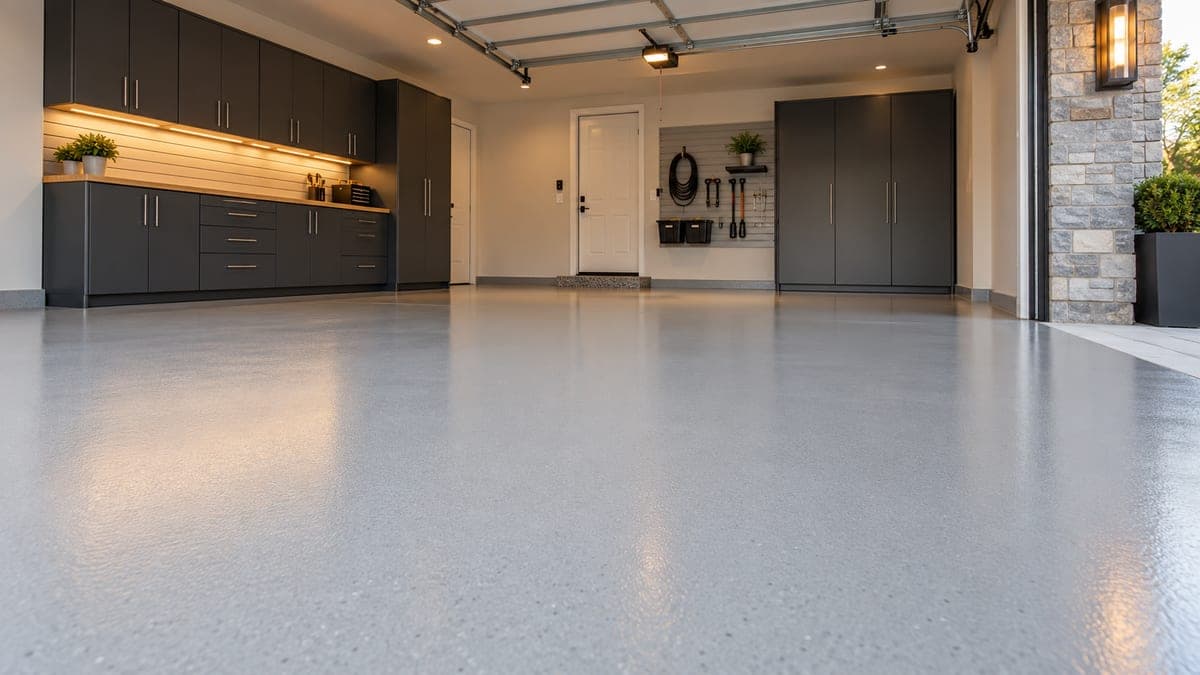
- A single-color coating creates a clean, straightforward appearance that works well in both residential and commercial environments.
- Solid-color systems can make a working space look organized without introducing a decorative pattern.
- A uniform background can make dropped screws, parts and other objects easier to locate than on a heavily patterned floor.
- Solid surfaces generally provide straightforward sweeping and mopping when the selected texture remains relatively smooth.
- Uniform color can reveal dust, tire marks, scratches, repairs and small imperfections more readily than multicolor flake.
- Dark colors may show light dust prominently, while very light colors can make dark debris, tire marks and stains more obvious.
- Gloss levels affect appearance and maintenance. Higher gloss can look cleaner and more reflective but may also reveal scratches and surface irregularities.
- Additional traction can be incorporated, although increasing surface texture usually makes routine cleaning somewhat more difficult.
- A coating system protects the concrete surface but cannot prevent structural slab movement or guarantee that repaired cracks will never reappear.
- For areas exposed to strong North Texas sunlight, the selected coating chemistry must be appropriate for UV exposure because some resin types can discolor over time.
What affects cost and timing
Planning range
Typically $5–$7 per sq. ft.
Planning estimate only. Pricing assumes a standard coating installation on reasonably sound concrete and includes mechanical grinding, minor routine repairs, base coat, full flake broadcast and protective topcoat where applicable. Existing coating removal, significant concrete repair, steps, vertical surfaces, specialty traction and other project-specific conditions may increase the final price. Your written estimate confirms the actual project price.
- Total floor area and layout.
- Concrete condition and hardness.
- Existing paint, coating, sealer or adhesive removal.
- Oil or other contamination.
- Crack, pit and spall repairs.
- Number of coating layers.
- Selected coating chemistry.
- Chosen color and required opacity.
- Desired sheen and final texture.
- Need for a clear protective topcoat.
- Vertical surfaces, curbs and steps.
- Moisture conditions in the slab.
- Temperature and humidity during installation.
- Required return-to-service schedule. For most Epoxy Panda systems, light foot traffic is typically possible in approximately 12–24 hours and vehicle traffic in approximately 24–72 hours. Exact timing depends on coating chemistry, temperature, humidity and project conditions.
Care and maintenance
Regularly remove sand, grit and other abrasive debris with a soft broom, dust mop or vacuum. Mop the surface as needed with water and a mild cleaner approved for the installed coating system, and avoid harsh abrasive cleaning pads. Clean spills promptly, especially oils, chemicals or strongly pigmented materials. Because a solid-color finish may show scratches and dirt more readily than decorative flake, frequent light cleaning often keeps it looking better than occasional aggressive cleaning.
Questions about solid color coatings
Is a solid-color coating the same as concrete paint?
No. A professionally installed resin coating system is different from ordinary concrete paint in material, preparation and installation. Proper coating systems are bonded to mechanically prepared concrete rather than simply painted over an untreated surface. The exact chemistry can vary depending on the application.
Does a solid-color floor show dirt more than flake?
It often can. A uniform surface has no decorative pattern to visually disguise dust, tire marks, small debris or minor scratches. Color selection makes a difference, so the best shade should be chosen around how the space will actually be used.
Can solid-color coatings be made less slippery?
Yes. Compatible traction material can be incorporated into many solid-color coating systems. The tradeoff is that a more aggressive texture generally takes more effort to clean than a smoother finish.
What sheen can a solid-color floor have?
The final sheen depends on the coating and topcoat selected. Options may range from lower-sheen finishes to highly reflective surfaces depending on the system. Epoxy Panda’s standard finish is gloss, with satin available on appropriate systems.
Related services

Ready for a Better Floor?
Tell us about your project and we'll help you determine the right coating system for your space.