Service
Warehouse Floor Coatings
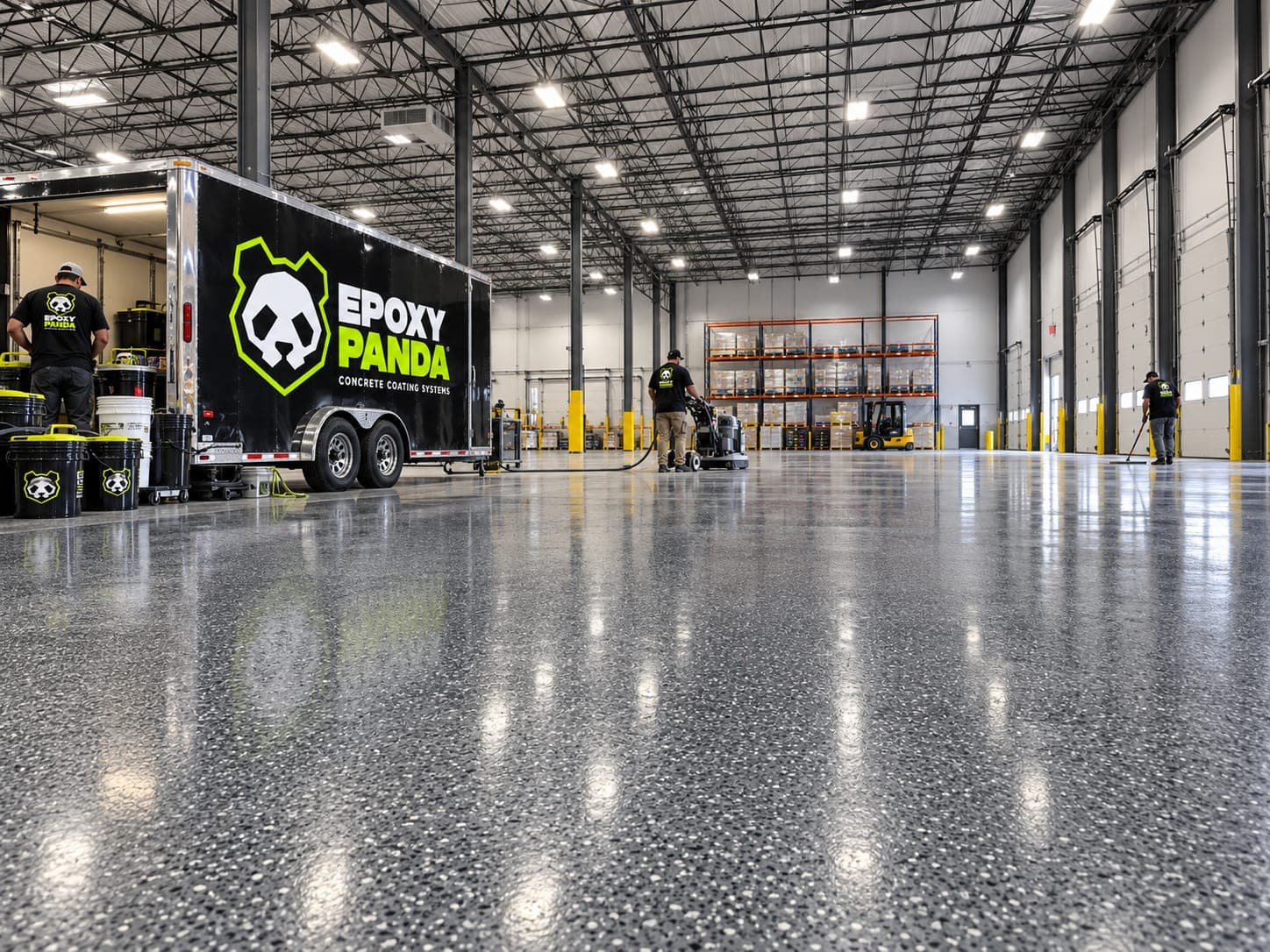
Warehouse floor coatings are commercial concrete systems designed for storage, distribution and operational spaces with sustained foot, cart, pallet and equipment traffic. Epoxy Panda installs warehouse coating systems throughout Dallas–Fort Worth based on the slab, traffic pattern, cleaning requirements and day-to-day facility use.
Best for
- Storage and distribution facilities with dusty or difficult-to-maintain bare concrete.
- Warehouse aisles, staging areas and operational zones that need a cleaner finished surface.
- Facilities where forklift, pallet jack or cart traffic must be considered during system selection.
- Warehouses that need different floor zones, colors or markings to support facility organization.
How it works
- Map how the warehouse actually operates. Traffic lanes, forklift routes, pallet staging, loading areas, storage racks, cleaning procedures and chemical exposure are reviewed before the system is specified.
- Inspect and mechanically prepare the slab. Existing coatings and weak surface material are removed as needed, and the concrete is mechanically profiled for the specified coating.
- Address appropriate defects and floor details. Cracks, pits and damaged areas are repaired where appropriate, while joints, drains, equipment bases and structural movement areas are treated according to their function.
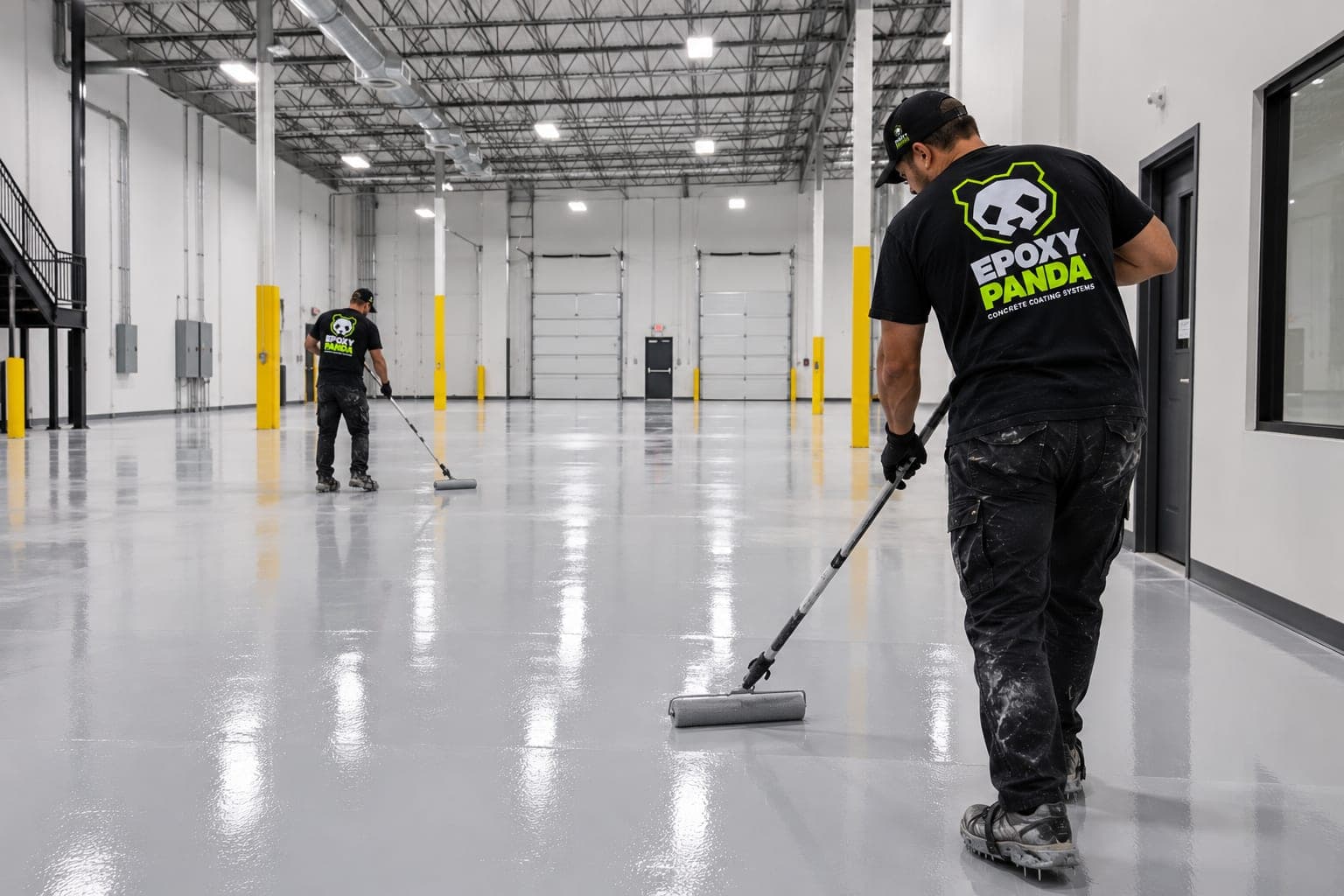
- Install the specified coating build. The primer, base coat and subsequent layers are selected based on the concrete and operational demands. Epoxy Panda warehouse systems may use epoxy, polyaspartic, polyurea or hybrid assemblies, specified around traffic, chemical exposure and cleaning.
- Create traction or operational markings where required. Texture, colored zones, aisle markings or other visual delineation may be incorporated if included in the scope.
- Apply the final protective layer and manage return to service. The floor must remain protected from foot traffic, forklifts, pallets and other operations until the installed system is ready for the applicable use.
Benefits and trade-offs
- A coated warehouse floor can reduce concrete dust and provide a more maintainable surface than untreated concrete.
- Color and sheen can improve visibility and create a more finished operating environment.
- Different areas can potentially be differentiated with color or markings to help organize traffic and work zones.
- Warehouse traffic can be highly abrasive. Forklift wheels, pallet dragging, metal debris and tight turning patterns can cause more wear than ordinary pedestrian or passenger-vehicle use.
- The most heavily traveled routes may wear faster than low-traffic areas and should influence coating-system selection.
- More aggressive traction can help in wet or operational areas but generally makes the floor harder to clean.
- Large slabs contain joints and often develop cracks. A coating can improve the surface but does not eliminate normal building or slab movement.
- Warehouse shutdown requirements can be as important as the coating itself. Large projects may need to be phased so operations can continue in other portions of the facility.
- Existing oil, tire residue, adhesives and contamination may require additional preparation before coating.
- Chemical resistance is specific to the installed chemistry and actual substances used in the facility; no coating should be assumed resistant to every chemical.
What affects cost and timing
Planning range
Priced with a custom estimate based on your facility.
Planning estimate only. Pricing assumes a standard coating installation on reasonably sound concrete and includes mechanical grinding, minor routine repairs, base coat, full flake broadcast and protective topcoat where applicable. Existing coating removal, significant concrete repair, steps, vertical surfaces, specialty traction and other project-specific conditions may increase the final price. Your written estimate confirms the actual project price.
- Warehouse square footage.
- Whether the building is empty or actively operating.
- Concrete condition and hardness.
- Existing coating or adhesive removal.
- Oil and other substrate contamination.
- Forklift and equipment traffic requirements.
- Rack layout and equipment that cannot be moved.
- Crack and surface-repair requirements.
- Number and type of coating layers.
- Required traction.
- Aisle or safety-color requirements.
- Drains, joints and detailed areas.
- Whether installation must be phased.
- Temperature and ventilation conditions.
- Required return-to-service schedule.
Care and maintenance
Warehouse floors should be cleaned frequently enough to prevent sand, metal fragments and other abrasive debris from being repeatedly driven across the coating. Use cleaning equipment, pads and chemicals compatible with the installed system, and address spills according to the substance involved rather than allowing them to remain on the floor. High-traffic turns, loading areas and other wear zones should be inspected periodically for localized damage. Prompt maintenance of damaged areas can help prevent a small defect from becoming a larger section of coating loss.
Questions about warehouse floor coatings
What coating is best for warehouse forklift traffic?
The correct system depends on forklift load, wheel material, traffic frequency, turning patterns and the concrete underneath it. Warehouse coating selection should be based on the actual operating conditions rather than simply specifying “epoxy.” Tight repetitive turns and concentrated wheel loads can be particularly demanding.
Can a warehouse be coated in sections while we stay open?
Often a warehouse project can be planned in phases, but the layout and coating system determine whether that is practical. Each active installation area must remain isolated until it can safely return to service. Traffic routes and access to racks, docks and equipment should be planned before work begins.
Can floor coatings cover warehouse expansion joints?
Movement joints should not automatically be treated like ordinary cracks. Their purpose and expected movement need to be considered before deciding how they should be handled. Improperly bridging an active joint can cause the coating or repair material to crack later.
Can you add warehouse aisle markings?
Yes. Epoxy Panda can add line striping and operational floor markings, which can be integrated with the coating project to identify aisles, zones or other operating areas. The exact materials and sequence should be compatible with the floor system.
Related services

Ready for a Better Floor?
Tell us about your project and we'll help you determine the right coating system for your space.