Service
Shop Floor Coatings
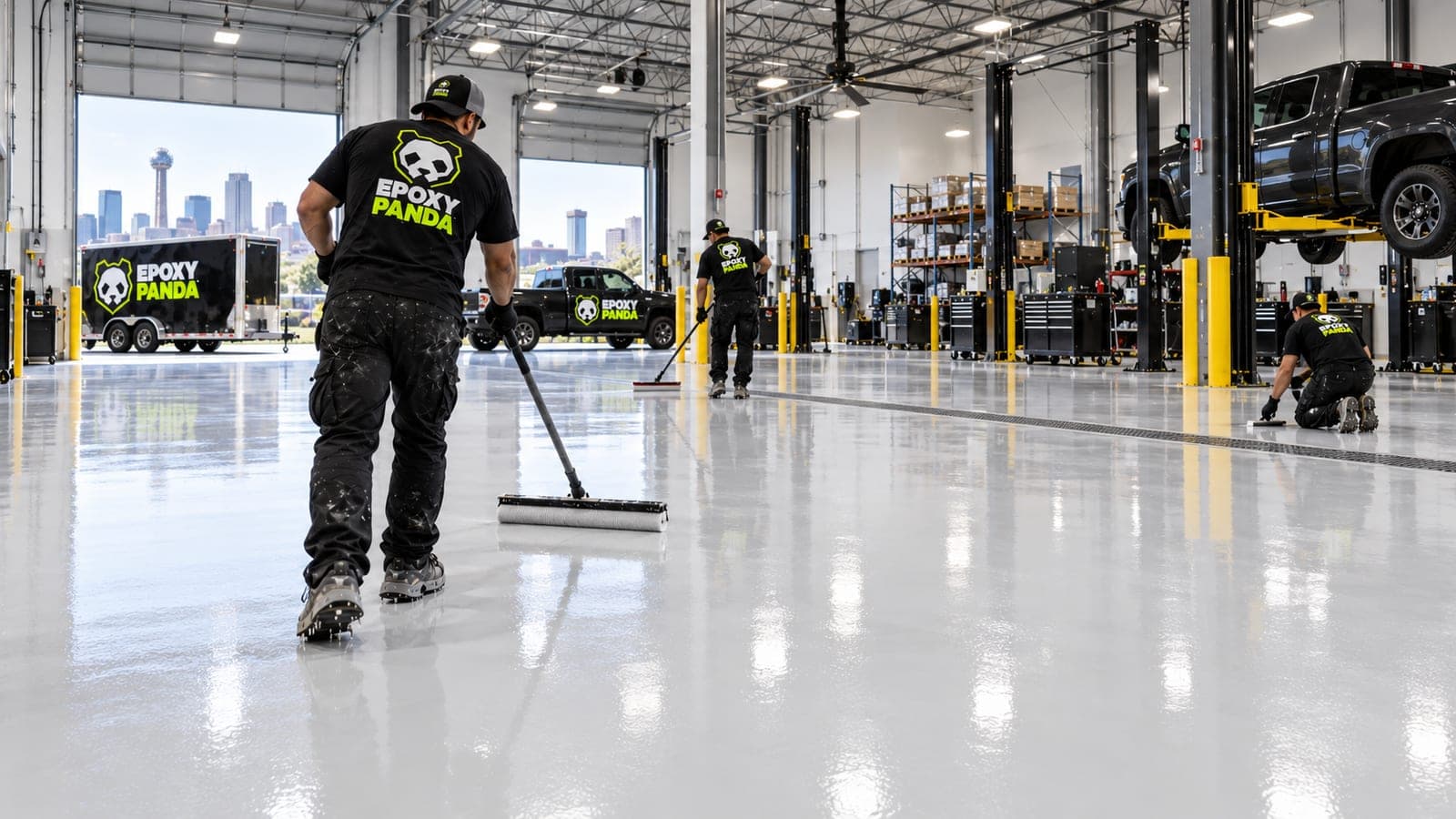
Shop floor coatings are protective concrete systems designed for automotive, fabrication, maintenance and workshop environments where floors see tools, equipment, vehicles and frequent cleaning. Epoxy Panda installs shop flooring throughout Dallas–Fort Worth with the system selected around the specific work performed in the space.
Best for
- Automotive repair and detailing shops.
- Residential or commercial workshops where tools, equipment and fluids are regularly used.
- Maintenance and service facilities that need a cleaner alternative to untreated concrete.
- Workspaces where traction, visibility and cleanability need to be balanced with daily wear.
How it works
- Review the shop environment. Vehicle traffic, lifts, jacks, welding, chemicals, fluids, equipment and cleaning procedures are identified because these conditions influence the coating specification.
- Mechanically prepare the concrete. Oils, existing coatings and weak surface material are addressed as appropriate, and the slab is mechanically profiled for coating adhesion.
- Repair suitable floor damage. Pits, cracks and spalled sections are repaired where appropriate, and details around drains, lift posts, equipment and joints are addressed separately.
- Install the selected coating layers. The coating chemistry and build are chosen around the intended traffic, cleaning and exposure conditions rather than appearance alone. Epoxy Panda shop-floor systems may use epoxy, polyaspartic, polyurea or hybrid assemblies, specified around the work performed in the space.
- Create the specified texture and finish. Decorative flake, solid pigment or another finish can be used, with traction adjusted according to wet conditions and working requirements.
- Apply the protective topcoat and allow the system to reach the required return-to-service condition before vehicles, lifts, jacks or heavy equipment are placed back onto the floor.
Benefits and trade-offs
- Coated shop floors are generally easier to sweep and clean than porous untreated concrete.
- A lighter or more uniform floor can improve visibility underneath vehicles and equipment.
- Decorative flake can disguise everyday dirt and minor wear, while solid colors can make dropped hardware easier to locate.
- Vehicle fluids should still be cleaned promptly. Chemical resistance varies by coating system and by the substance involved.
- Floor jacks, jack stands, sharp steel edges and dragging heavy equipment can create concentrated loads capable of scratching or damaging a coating.
- Welding, cutting and grinding can expose floors to sparks, hot metal and impact. The actual work performed in the shop should be considered before choosing a system.
- Aggressive traction improves grip when fluids or water are present but can make oil and shop residue harder to clean from the surface texture.
- Hot tires and vehicle traffic create different demands than a decorative interior floor, so automotive use should be disclosed during system selection.
- A coating can improve damaged-looking concrete but does not correct structural movement or eliminate future cracking.
- Severe petroleum contamination that has penetrated into the concrete may require additional preparation and can complicate coating adhesion.
What affects cost and timing
Planning range
Priced with a custom estimate based on your facility.
Planning estimate only. Pricing assumes a standard coating installation on reasonably sound concrete and includes mechanical grinding, minor routine repairs, base coat, full flake broadcast and protective topcoat where applicable. Existing coating removal, significant concrete repair, steps, vertical surfaces, specialty traction and other project-specific conditions may increase the final price. Your written estimate confirms the actual project price.
- Total shop floor area.
- Existing oil and chemical contamination.
- Existing coating removal.
- Concrete condition.
- Cracks, pitting and spalling.
- Vehicle and equipment traffic.
- Presence of lifts and fixed machinery.
- Floor drains and wash areas.
- Selected coating system.
- Required traction.
- Decorative flake or solid-color finish.
- Chemical exposure requirements.
- Whether tools and equipment must be moved in phases.
- Required return-to-service schedule.
Care and maintenance
Sweep or vacuum metal chips, sand and other abrasive debris before it is repeatedly driven or walked across the floor. Clean oil, coolant, fuel and other automotive fluids promptly using products compatible with the installed coating. Use protective practices under sharp equipment feet, jack stands or other concentrated loads when appropriate. Inspect high-use work areas periodically because localized damage around lifts, benches and vehicle paths can occur sooner than in lightly used parts of the shop.
Questions about shop floor coatings
Will a coated shop floor resist motor oil and automotive fluids?
Many coating systems tolerate common automotive exposure, but chemical resistance depends on the specific coating and fluid. Spills should still be cleaned promptly rather than left on the floor indefinitely. Brake fluid, solvents, fuels and specialty chemicals can behave differently and should be discussed when selecting the system.
Can I use a floor jack on a coated floor?
Floor jacks can be used on suitable shop coating systems, but concentrated loads, steel wheels and trapped debris can damage the finish. Equipment type and expected use should be considered when the floor is specified. Dragging rather than rolling heavy equipment creates additional risk of scratching or gouging.
What floor color works best in an automotive shop?
There is no single best color. Lighter solid colors improve visibility, while multicolor flake tends to disguise dirt and everyday wear more effectively. The right choice depends on whether cleanliness visibility or cosmetic forgiveness is the higher priority.
Can you coat around an existing vehicle lift?
Often the floor can be prepared and coated around fixed equipment, but access around the lift and condition of the surrounding concrete must be evaluated. Removing equipment may provide a more continuous installation when practical. The project scope should specify how lift bases and anchors will be handled.
Related services

Ready for a Better Floor?
Tell us about your project and we'll help you determine the right coating system for your space.